
Mazda MX-30 Electric
2 reviews
- See all


- +7

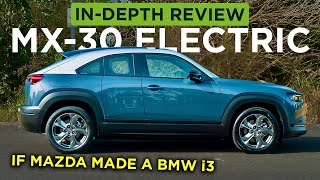
Excellent to drive but suffers from a sub-par electric range – Mazda's first electric car is a great attempt at making a unique EV. An EV with Japanese attention to details and use of high quality materials. Mazda's suicide doors even have made a comeback here. Sadly, its price and electric range are two major factors that have resulted in lacklustre sales. I’m a stickler for attention to detail, and I can safely say that the MX-30 is one of the best built electric cars you can buy.
The usual high quality materials were used across the dashboard and other major touch points. I also very much enjoyed the cork inserts, which are a nod to Mazda’s origins as a cork manufacturer.
However, I was more impressed by the fit and finish in the pedal box, the quality of the seats and the nooks and crannies of this crossover. There were extra pieces of trim placed around these areas, where other brands probably wouldn’t even bother to put them.
Prices for the petrol powered versions of the MX-30 start as low as the early $30,000 range.
The MX-30 electric starts from $65,490 before on-road costs and incentives. That’s quite a jump for an electric powertrain and a few more features.
In addition, that’s right up against stiff competition like the Tesla Model 3 and the Polestar 2. It’s asking people to consider this car with less range over these mid-sized EV staples.
It feels like a very premium product, but Mazda has to be confident that buyers will value the driving experience and design over its opposition.
Battery warranty is 8 years or 160,000km (whichever comes first), while the entire car is covered by a 5 year/unlimited kilometre warranty.
Servicing is capped for the first 5 services, which are due every 12 months or 15,000km (whichever comes first). Totalling $919, it’s a reasonable price to pay for servicing, especially compared to other brands, like Kia and Volvo, offering EVs.
Inside, it’s a silent oasis. I spent a lot of seat time in the MX-30, and it always managed to do a stellar job of isolating not just road noise, but any stressful thought too. Playing through the speakers were quality tones, both high and low, accompanied by a clear bass.
The car also plays a Jetsons-like artificial engine sound that sounds like how you’d imagine an electric car to sound. It whirrs on the outside to alert pedestrians you’re driving past at low speeds, but continues on the inside to mimic a noisy engine. I’m not the biggest fan of the interior sound, so I just wish you were able to toggle it on and off.
One of the best parts about this car was how refined the braking experience was. I’ve been noticing a trend in Mazda’s cars: they nail the braking feel without compromising interior comfort.
One of the goals of the design team was to reduce occupants' head movement upon acceleration and deceleration. Honestly, it works.
Braking in the MX-30 never disrupts the ride, even when you’re pushing deeper into the pedal box. It’s a major part in what makes this car so great to drive.
Although, it would have been nice to have a one-pedal driving option for regenerative braking.
One of the best parts about this car was how refined the braking experience was. I’ve been noticing a trend in Mazda’s cars: they nail the braking feel without compromising interior comfort.
One of the goals of the design team was to reduce occupants' head movement upon acceleration and deceleration. Honestly, it works.
Braking in the MX-30 never disrupts the ride, even when you’re pushing deeper into the pedal box. It’s a major part in what makes this car so great to drive.
Although, it would have been nice to have a one-pedal driving option for regenerative braking.
Mazda's new shifter design, which is easy enough to operate, looks and feels the part in this cabin.
The cabin has a certain stillness about it when running around during your daily drive.
You stay upright, and hardly feel the external forces that you’d otherwise experience in a heavy car. With a lowered centre of gravity, thanks to the battery packs, you experience sharp cornering and responsive steering.
It’s an extremely pleasant car to drive, and it’s - dare I say - fun to drive. It’s possibly the best handling EV I’ve tested.
The suspension and handling absolutely benefit from a smaller battery, and it’s part of the reason I believe Mazda was firm on such a compromised range. They’d rather have a smaller range than sacrifice their handling and suspension.
Managing around 18.5kWh per 100km, it could be a little easier on the electrons. The MX-30’s battery is actively cooled, however it’s still not that quick to charge despite it being smaller in its capacity.
Charging from 20-80% takes 9 hours via the provided charger connected to a household plug. Upgrading to a AC wall-mounted charger will reduce that time to 3 hours, and it’ll take 36 minutes via a 50kWh fast charger.
Overnight charging feels quick enough to keep the car topped up, but that fast charging time isn’t too fast for the amount of range you get back.
There are four screens inside the MX-30: a digital driver display (flanked by analogue dials), a heads up display, a centre infotainment display and a display dedicated to the climate controls.
Controls are raised towards the driver via a ‘floating’ centre console and commanding driving position.
The centre screen isn’t touch sensitive, following Lexus and BMW’s suit of only allowing you to interact with the screen via a dial. Mazda’s designers actually measured cognitive load regarding the screen’s UI, and designed its interaction and controls around that.
311L of boot space might not sound like a lot, but this small crossover’s flat load floor and square entry makes it easy to make the most of this space.
Disappointingly, for the asking price, the MX-30 lacks an automatic tailgate.
Seats fold in a 60:40 split, which makes it difficult to maximise the space when carrying passengers and cargo.
Seat cushioning was incredibly plush, and all occupants were able to get comfortable, although the ergonomics of the rear seats are a little less comfortable than the front ones. The battery packs push your legs a little higher, so you feel like you’re crouching just a bit.
With the BMW i3 now discontinued, this would be the perfect replacement for that.
If you know you don’t need a car to road trip or travel interstate, the MX-30 drives the best and has one of the cooler EV interiors compared to the likes of the Hyundai Kona Electric.
However, there are big names and big players in this price range, and I can’t help but suggest cars like the Tesla Model 3, Polestar 2 or Volvo XC40 Electric over the MX-30 if you need your EV to do just that little bit more.
As a city car, it’s ideal for a small family or couple. As your only car, and you see yourself leaving the city every so often, other EVs are a better bet.
Mazda has the formula right, but upping the practicality, features and range in a future model will see them develop a truly competitive EV.
*Disclaimer - I work for ProductReview as their independent car and motorbike expert. I borrow new cars and motorbikes from manufacturers and owners to review. I am not paid or incentivised by these brands to post reviews. I write and create content to provide insight and information about any new or used vehicle I can get my hands on.

need a upgrade and go electric petrol too expensive – love Mazda they build grate cars and mine is old and the kids are growing need a bigger car soon
Purchased in at Max Factor for $55,000.
- Bought: New
Extra Information
ProductReview.com.au has affiliate partnerships. These do not influence our content moderation policies in any way, though ProductReview.com.au may earn commissions for products/services purchased via affiliate links.