Best Mirrorless Cameras

Canon EOS R50
- See all


We were recently in the market for a new digital camera. My wife is a coloured pencil artist who want's to get high quality reference photos of birds… Read more
and wildlife for her art. Over the years, we've had a plethora of film cameras, digitals and bridge cameras that were good but not top quality. Even the excellent camera in the modern phone could not compare to a modern digital camera for picture quality. A friend loaned to us their Nikon P950 bridge camera to try out. It was a nice camera to use with pretty good picture quality but it had some minor limitations and lower picture quality than we really needed. When we were seriously looking at a new camera to buy for wildlife photography, it came down to a toss up between the Nikon P1100 bridge camera and the Canon EOS R50 mirrorless DSLR. After careful consideration, we chose the Canon. The choice was determined by two factors. #1. The Nikon had a smaller sensor with lower picture quality, has less low light capability, is heavy and was also not immediately available at any local stores and, #2. The Canon was cheaper, has a bigger sensor for better picture quality and is much, much lighter and we could have it right away. The Nikon has 16MP sensor and an impressive 125x optical zoom, equivalent to 24-3000mm and ease of use with no lens changes to worry about. However, the Nikon has a lot of glass and mechanical stuff in that lens casing and is heavy at 1.5kg. That's a lot of weight to carry all the time. The Canon on the other hand has 24MP sensor, it is much lighter than the Nikon. The body alone weighs only 380g and only 529g with the 18-45mm lens attached. It has a bigger APS-C sensor which is over 11x larger than the sensor in the P1100 and with much better low light capability than the Nikon. The Canon came as a 2 lens bundle with 18-45mm (152g) and 55-210mm (310g) lenses. For super long distance shots, I purchased an f11 600mm (940g) prime lens to go with it. Having the interchangeable lenses is a bit of a pfaff when you want to change focal length quickly but it also means that the camera is not heavy all the time. The EOS R50 with the 'huge' 600mm prime weighs 1.3kg vs 1.5kg for the Nikon. With the Canon, we need a carry bag with enough storage space for the camera body and the lenses. This makes the bag a bit bulky. The Nikon is much more compact and has a much smaller bag. I can't comment on the Nikon performance because we haven't used it, so I shan't; but after owning the Canon for a few months now, we have explored most of the many features and functions. Having owned a few "instamatic" and bridge cameras before, this one leaves the others in it's wake. It's by no means the 'Rolls Royce' of cameras, in fact it is a Canon 'entry level' camera. It is a mirrorless camera meaning that unlike an SLR camera, there's no mechanical gizmo to flip a mirror out of the way each time you press the shutter button. This makes it less complicated and lighter too with a longer life due to less mechanical gubbins' to wear out or go wrong. The view finder image is an LCD image from the sensor and not an optical path through the lens but it is still excellent. THE GOOD STUFF: This camera with all it's functions and quality is IMHO best bang-for-buck. It's perfect for a beginner or budget conscious person but with most of the features the more professional cameras have to offer rolled up in a compact package. It has some other nifty feature too, like the wireless connection to your phone or computer to download images. You can also control the camera hands-free from your phone. The image quality is very good and the lenses are easy to change. There is a viewfinder and a fully articulated 'touch screen' LCD display. There is a built-in flash and a 'hot foot' too. I have tried the time lapse function to video the summer storms rolling in and they look amazing. The camera has many cool functions to play with. You can leave it as a point-and-shoot camera set in "auto" mode, or fiddle around with ISO, F stop, shutter speeds and other settings to your heart's content to get the optimal shot. Being a newbie to the world of photography I am impressed with the abilities it gives me. Battery life is better than expected too. THE NOT-SO-GOOD STUFF: My only complaint about this camera is the button layout. All the buttons to change modes and do other functions are located on the right hand side (handle) of the body around where your right hand goes. This is convenient for operation but it means that they are susceptible to accidental pushing of the buttons just by holding the camera. It's just a minor 'first world' problem and something to get used to I guess. The EOS R50, like most DSLR cameras is susceptible to weather. There is no weather sealing so be careful to not get it wet. LENSES: Our camera came as a bundle with two lenses included. The lens hoods are not included but are available separately. The 18-45mm is perfect for family snaps, general photography and close-up's. The 55-210mm is best for sports and wildlife photography. The lenses are of the (12 contact) RF-S family and the RF mount is not compatible with the older (8 contact) EF lenses. However, there is an accessory adaptor ring available to allow EF lenses to be used on the RF mount. So, if you've got an old Canon, you can use the old lenses on the new camera but you need to purchase the adaptor. There is a wide variety of lenses from canon and other manufacturers like Sigma and Tamron available for this camera that can suite all needs. The EOS R50 camera body does not have image stabilisation. However, the RF-S (S for Stabilisation) lenses do carry that feature. CONCLUSION: I'm very pleased and impressed with our Canon. If you want a good all round but budget camera with all the bells and whistles, you can't go past the Canon EOS R50. It has all the tricks and trappings of expensive cameras at a fraction of the cost. It's light and compact and perfect for beginners and anyone wanting a good quality DSLR without spending a fortune.

Canon EOS R6 Mark II
Excellent – Bought the canon after reading many articles, and asking salespeople to recommend a camera, I had a Fuji which had a very difficult menu system that… Read more
put me off photography, but thus menu on the canon is intuitive, (but like the apple computer over Microsoft) everything seems so straightforward there are terms and settings I still don’t understand, but the shop said to pop by anytime for advice. This camera exudes quality, not cheap but worth the extra. Very pleased with the quality and ease of settings and very helpful staff at camera electronics.
Just to add to this 6 months on, The colours you get from this camera are incredible, I use a Nisi polarising filter, and shoot in Raw mode, I also subscribe to Lightroom, which is a new learning curve for me, and prob need more utube hours to perfect, but I just printed a selection of my photos and I was blown away with the colours and quality, even the lady who processed the pics commented on them as I picked them up, (never had that before!) I think the full frame is a must for anyone wanting quality, it’s 24.000 mega pixels, which seems adequate, if I had money I’d definitely look at the new R5, but that’s up there price wise for a hobbyist, I only buy L series lenses, which is what you need if your a perfectionist! Although I just bout a 15mm f2.8 standard lens, less than 500$, as I want to try some astrology pics, and maybe I’ll trade up if I get into it. But was told the quality difference isn’t as noticeable with this type of photography, the fast lens is more important for now. Anyway this is my experience, years ago I had minolta 9000, film camera which I loved, and a entry model Fuji which I found complicated, apart from that I’ve never used a Nikon, which was on my list when I chose the canon because the salesmen all favoured the canon and because of the menu system, and I have no regrets!

Olympus OM-D E-M10 Mark IV
- See all


I'm going overseas so I bought the Olympus E-M10 Mark IV. I've already owned a range of film and digital cameras over the decades and I have a good… Read more
understanding how cameras have progressed . My main camera is a Sony A7III with a whopping 40-something MP sensor (although some would consider this low resolution considering there are now 60 MP and 100 MP cameras out there). To be honest, the Sony is far superior to the Olympus in many ways but so is the weight. I hate lugging the Sony and its various lenses around with me. In the end, the Sony distracted me so much from photography during my last overseas trip that I started leaving it in the hotel and used my mobile phone.
The E-M10 is plastic, light weight, has a good lens and features that make photography fun again. Especially for street photography or long walks on dirt tracks, the Olympus just fits in my pocket. No need to carry a camera bag around and no need for shoulder pain. I'm done with being a pack mule!
Image quality isn't the only difference between Sony and Olympus, however, image quality or the number of pixels wasn't the deciding factor in buying the Olympus. So, first the most debated issue of 20 MP vs 40 MP. 20 MP is "sufficient". I took some of the best photos of my life on a 14 MP Nikon. The Olympus 20 MP isn't noticeably better in terms of megapixels compared to my 11 year-old 14 MP Nikon camera. But the images overall look better on the Olympus (i.e. more crisp) due to internal processing of jpgs. However, when zooming into the images (because of the digital tele converter software), the pixels become noticeable. However, all the image degrading features in the Olympus can be turned off. There are pros and cons regarding internal processing of images that I won't be getting into because the various internal software gimmicks built into this phone are complex. However, straight out of the box, the images are wholesome, good and nice to look at. There are settings that you need to change to get even more out of your E-M10. If you look up Robin Wong on YouTube, he has good tips on setting up your Olympus. Only after changing some settings did the E-M10 reveal how good it is. Although more megapixels produce better images in theory, in reality, the tone, colours and other factors affect whether an image is good or not - not the megapixel count.
If you look at the image of the red car, I processed the RAW file and cropped it when zooming in. The results are great. A 20 MP sensor can produce great results, even when zooming in at the extreme. Also, the red is the lushest red I've ever seen. The colours are just warm, wholesome, almost hypnotising...and no, I don't work for Olympus!
Moving away from 20 vs 40 MP sensors debate, the second thing to note is the dodgy positioning of the on-off switch. It's on the left side of the camera body and it is difficult to turn on. Big fail here. Also, some of the other buttons and dials can be turned accidentally because this is a small camera. That's the price you pay for having a small camera. I'm not knocking Olympus but the on-off switch is pretty bad. The on-off button on the Olympus PEN-5 is much better.
The third odd thing about the E-M10 is the lens cap. It is so small and thin, it is hard to remove and easy to lose. I don't get it. Put a string on it! After removing the lens cap the other day on the footpath, it slipped out of my hand and rolled toward a drain. Lucky it stopped before it vanished.
The fourth issue is the graininess of the images at high ISO. Images above ISO 6400 border on useless. That's where my Sony 40 MP camera laughs at the E-M10 but, then again, the Sony cost three times as much. Obviously, cameras with larger sensors have less "noise" at higher ISO.
The fifth thing is the plastic body. Do I care? Hmmm, not really. But for over $1,000 I was expecting aluminum or a light alloy at least. The question here is: since my iPhone takes really nice images (but without the fancy features of the E-M10), there's little justification to buy an E-M10. Sony A7-II already has a 24 MP sensor and is technically better at the same price. However, I refer back to my opening arguments that I bought the E-M10 for the look of the images and the lower weight.
That about sums up the bad. Now to the good: Keeping in mind that this is only a 20 MP camera, the images are not meant to be zoomed-in and cropped. They are good right out of the camera if photographed at low ISO and framed correctly. The jpgs are generally very good and you can apply in-camera processing to make the images excellent right out of the box. While RAW images can't be edited in the camera, they are higher quality and generally require post processing in a software program like DarkTable, RawTherapee or OM Workspace anyway. The RAW images are very good. I've also taken awesome images on my 40 MP Sony but they had to be processed in editing software to bring out the best colours (E.G. red) while the Olympus sensor and processing already makes the images look softer in some ways but punchier in others, more like analogue film. There's a general desire among photographers to get the 'filmic' look. Similar to the Fuji and older Nikons, the Olympus achieves that.
I don't like Sony's menu. In contrast, Olympus has an easier menu but it shines when pressing the Super Control Panel button. You can access all important settings through this feature on the touch screen or via the toggle button at the back.
The M-Zuiko 14-42mm lens is pretty good and better than Sony's average zoom kit lenses.
The camera is fun to take on photo sprees and to just tuck away in the glove box and grab it when needed. I haven't had any battery issues and overall the camera is sturdy, albeit being plastic. The only real downside is the price. Although I negotiated it down to $1,021, in my view, $899 (including lens) should be the most. Otherwise, get an iPhone. But, I wanted this particular camera - not a Fuji, not a Panasonic and not Canon. I wanted a particular look in my images and the E-M10 gives it to me.
If the price and on-off button were fixed, I would have given it 5 stars.

Sony Alpha 7R V
Unleash Your Creative Vision – The Sony A7RV camera is a groundbreaking addition to Sony's esteemed Alpha series, setting a new standard for professional-grade mirrorless cameras.… Read more
Designed to meet the demands of photographers and videographers alike, this cutting-edge camera offers unparalleled image quality, versatility, and performance.
At the heart of the Sony A7RV is its remarkable 61-megapixel full-frame sensor, which delivers breathtakingly detailed images with stunning clarity and dynamic range. Whether you're capturing landscapes, portraits, or action shots, every frame is rendered with exquisite precision and lifelike color reproduction.
Beyond its impressive resolution, the A7RV boasts advanced autofocus capabilities, thanks to Sony's renowned Real-time Eye AF and Tracking AF technology. This ensures tack-sharp focus on subjects, even in challenging shooting conditions, allowing you to confidently capture fleeting moments with precision and accuracy.
Videographers will appreciate the A7RV's 4K recording capabilities, which produce cinematic-quality footage with remarkable clarity and detail. With support for multiple recording formats and frame rates, including 10-bit 4:2:2 color depth and S-Log3 gamma, the A7RV offers unparalleled flexibility for professional filmmaking projects.
The camera's ergonomic design and intuitive controls make it a joy to use in the field, while its robust weather-sealed construction ensures reliability in any environment. The high-resolution electronic viewfinder and tilting touchscreen display provide a seamless shooting experience, whether composing images at eye level or from creative angles.
Furthermore, the A7RV's extensive connectivity options, including Wi-Fi, Bluetooth, and USB-C, enable seamless integration with a range of accessories and workflow solutions. Whether you're transferring files wirelessly to your smartphone or tethering to a computer for studio shoots, the A7RV streamlines your workflow with ease.
In conclusion, the Sony A7RV camera is a game-changer for professionals and enthusiasts alike, offering uncompromising image quality, advanced features, and unmatched versatility in a compact and portable package. Whether you're a photographer, videographer, or content creator, the A7RV empowers you to push the boundaries of your creativity and capture moments with unparalleled precision and clarity.

Canon EOS R5 C
Once again CCC WAREHOUSE have not failed to disappoint. Canon R5C was delivered on time before Easter hols. Product works fine, delivered by DHL and in excellent packing at a competitive price too. Thank you Michael and Andy. Show details
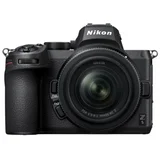
Nikon Z 5
Love this camera! – Awesome features, takes great photos and is exactly what I wanted in a camera! Show details

Canon EOS R7
This camera is genius for its price and offers a photography enthusiast much of what the top end Canon cameras offer professionals for a fraction of… Read more
the price..
BREAKING NEWS**** I HAVE READ THAT AN EOS R7 mark ii MIGHT BE DUE FOR RELEASE**** THIS REVIEW WONT APPLY TO THAT NEW MODEL
There is a compromise with this camera. It uses a cropped sensor which gives a 1.6 times increase in focal length for a standard RF Canon lens and might give rise to visual "noise" in some images. A 100mm EF lens has the effective focal length of a 160mm lens on this camera. The supplied lens is a kit lens which is an "STM" lens. It is an 18mm to 150mm zoom which is almost as sharp as a full frame lens. Canon makes a 25mm-105 RF lens which does not offer the same wide angle or zoom. There is a different RF zoom lens made for this camera by Sigma that is 16mm - 300 mm and from reviews it is as good as the Kit lens. Both lenses are far more practical than older full frame Canon lenses with adaptors. I have purchased this Sigma lens and I find it better than the reviews say it is. I use it in the range of f7.1 to f14 with a minimum exposure of 1/500 and AUTO ISO.
Some critics say that cropped sensors contribute to "noise" or speckling and discoloration of images taken at high speed and high ISO settings. I am finding little evidence of such issues. See the attached photos.
I have a powerful earlier generation 600RT flash plus an EF 70mm-200mm lens which can both be used on my new camera. This lens needs an adaptor and it works on this camera.
The camera body itself works exceptionally well. It is in the area of new features that I am coming to terms with this camera. It uses web-enabled wi-fi with printers and smartphones. It chews up battery power to connect to these and a day's photography takes the full charge of a battery. However, I can switch the camera to aircraft mode turning off wi-fi and that makes it very efficient in its battery life.
It is possible to print directly from the camera with a wi-fi connection. This takes time and practice. Powerful autofocus functions which have a tracking capability for moving targets, work well, but they take a bit of getting used to.
I have taken a short course from a company called Widescenes Photography to learn how to get the most benefit out of this camera. I have given it 4 stars for its technical perfection When Canon improves its useability with Wi fi it will get 5 stars.

Canon EOS R5
Learning to Handle Briliance – My R5 with Canon lenses has performed better and better as I have become used to handling the features that are new to me. Tracking focus Has turned… Read more
out to be a brilliant addition to my photographic experience as I've learnt how to use it well. Battery life is shorter when tracking is always on but that is a small price to pay for the great results.

Canon EOS R100
Great entry level camera with all the mirrorless DSLR stuff you’d need. Video quality is good but not as great as similar priced Canon cameras like… Read more
the M50 Mark II. It is NOT a full frame camera - it has a smaller sensor - but that means it’s lighter to hold which can become important when travelling or shooting for long periods - and also for smaller wrists, making it a better option for children (compared to heavier and more costly cameras).

Canon EOS RP
Still Competitive – I bought mine used, but there are some interesting kit options new. Overall the camera feels very up to date. To get the most out of it there is a… Read more
learning curve, but I don't think it's overwhelming if you really are interested. If you are not interested in learning photography I would look lower down in price in the APS C (R series if want the latest and the way it's trending). Phones can't do sports and wildlife/action well, and APS does that very well. Other makes exist but I do not have enough knowledge to properly contemplate them.
There are many reviews out there, and I am just a hobbyist re-entering serious cameras.
Its main downside online is its lack of DR (dynamic range). It's something to be looked at BUT if you are not looking to spend time editing post-camera picture taking I would not get too distracted by it. Any wedding photographer was happy with less not too many years ago. Nonetheless, if you are a mid-afternoon white street with narrow dark alleyways person, and you want as much as possible to be contemplated (not blown out or underexposed) better options exist for sure. However, its bracketing options (common thing) allow good making-up grounds. Top trump types may also forget that this camera does really well at maintaning it's DR higher up the ISO than some measuring more in the headlines. It's really quite a nice performer for nonextreme anything and better across the board than many might first assume.
It's big enough to allow enough buttons (usage cases) to be easily accessible. If you are a keen guardian looking at your kid playing sport I doubt more is needed (been there and done it with less).
It's a full frame camera. Really great glass (lenses) are big, heavy and amazingly expensive. This camera lends towards wide and shallow easily, but can do the lot. I encourage anyone to remember APS C is also more capable of this than many might say.
If I were buying new I would probably go APS C, unless I really new what I wanted. If I were leaping toward FF I would probably veer the R8 if buying new, but this camera is still very good and if it came with a lens I really wanted I would look hard at it after understanding its nuances.
I can say I find the Canon editing software that Canon users get to be excellent. Serious photographers can debate more, but for free it's also as much as most will ever care about, IMO.
This is a very good camera. Checked against your usage case scenario and more study it might be right.
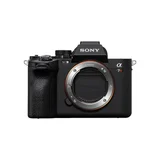
Sony ILCE-7RM5
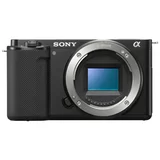
Sony ZV-E10
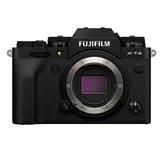
Fujifilm X-T4
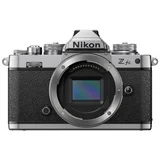
Nikon Z FC Body Only
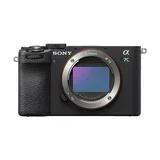
Sony Alpha 7C II Compact Full-Frame Camera
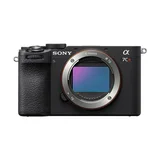
Sony Alpha 7CR 61.0 MP Compact Full-Frame ILCE7CR
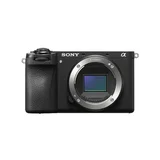
Sony Alpha 6700 Premium E-mount APS-C Camera ILCE-6700

Panasonic Lumix DMC-G7W
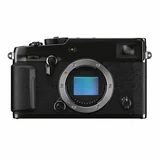
Fujifilm X-Pro 3

Canon EOS R3
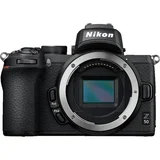
Nikon Z 50 Body Only
