Best Digital Cameras

Canon EOS 6D
Love it. Great full frame camera – Great camera for video. I use it as my main camera. Maybe not the best for photography? Only con is doesn't have 4K. But i'm not using 4K anyway. Great value for money Show details

Panasonic Lumix DMC-FZ2500
I can't fault this camera for my needs – I've had many cameras over the years, having bought my first cheapie in 1968. They've all been good for their time and suited me fine as an amateur… Read more
photographer who doesn't put much time or effort into his photos, but expects good results nonetheless. I recently retired and ventured into the world of DSLR's and that opened up a whole new interest for me, but I got a little wearisome carrying around different, heavy lenses and a big bag. I looked into bridge cameras and after doing quite a lot of research and reading a lot of reviews (especially those on ProductReview.com.au) I purchased the Lumix FZ2500 and I couldn't be happier. I'm not very techie when it comes to photography and I'm only speaking as a layman when I say this camera has it all for me. Great lens, great support and instructions, beautiful photos and easy to use.

Panasonic Lumix DMC-FZ1000
Exceptional – Have now owned this for 6 months, and it's taken most of that time to get my head round it, but I conclude it is exceptional, the best camera I have… Read more
ever owned ( including low end film slrs and dslrs) and amazing value.
It has introduced me to RAW stills and 4K video which I now shoot most of the time.
Best features:
Zoom lens is long, and fast for its length (f2 at wide, f4 at long end.)
4K video stunning ( and you can take an 8mpixel still from any frame , in the camera, and save it in the camera.)
Raw or Raw+jpg mode beautfiful, and you can tweak a Raw still in the camera, and save it in the camera.
Viewfinder, fabulous, big and rich
Fold out screen is big and twists every which way.
Flexibility of a long long zoom in 1 fixed lens....it might look huge or feel bulky but it is nothing compared to a big dslr with a bag of lens you would otherwise be lugging around. But ergonomically perfect for big hands like mine.
Many many modes and software options, I love the dedicated mode bezel on the top, and the quick menu changes make most adjustments easy.
Idiot proof full-auto modes.
Price and value for money are exceptional.
Room for improvement?:
Needs a dedicated aperture ring on the barrel. ( juggling aperture & exposure time on the back bezel is not cool.)
You will probably need a spare battery.
Needs a headphone socket for monitoring video sound. ( though there is a visual bar indicator for audio on the screens.)
Instruction manual can be confusing but can't they all?
If you can afford it, buy it's new version, the FZ2500, as it remedies most of the deficiencies, and adds even more features, but if not, you will adore the FZ1000.

Panasonic Lumix DMC-TZ70
Best camera ever – Unable to carry heavy cameras anymore, I bought my first Lumix, loved it and upgraded. Mostly take seascapes and seabirds, that need minimal editing… Read more
and are used for publication. People are amazed by the zoom in such a small camera and the quality of my pictures. Am looking forward to upgrading to a TZ90 next.

SJCAM SJ4000
SJ scam = junk – dont waste your money is my opinion. Worked about 5-6 times now wont download the videos / photos. 2nd one died within a month and no help from sjcam… Read more
from china. The one that died was within a month of purchase. The second one only did about 10 videos and maybe 20 photos

Canon EOS R50
- See all


We were recently in the market for a new digital camera. My wife is a coloured pencil artist who want's to get high quality reference photos of birds… Read more
and wildlife for her art. Over the years, we've had a plethora of film cameras, digitals and bridge cameras that were good but not top quality. Even the excellent camera in the modern phone could not compare to a modern digital camera for picture quality. A friend loaned to us their Nikon P950 bridge camera to try out. It was a nice camera to use with pretty good picture quality but it had some minor limitations and lower picture quality than we really needed. When we were seriously looking at a new camera to buy for wildlife photography, it came down to a toss up between the Nikon P1100 bridge camera and the Canon EOS R50 mirrorless DSLR. After careful consideration, we chose the Canon. The choice was determined by two factors. #1. The Nikon had a smaller sensor with lower picture quality, has less low light capability, is heavy and was also not immediately available at any local stores and, #2. The Canon was cheaper, has a bigger sensor for better picture quality and is much, much lighter and we could have it right away. The Nikon has 16MP sensor and an impressive 125x optical zoom, equivalent to 24-3000mm and ease of use with no lens changes to worry about. However, the Nikon has a lot of glass and mechanical stuff in that lens casing and is heavy at 1.5kg. That's a lot of weight to carry all the time. The Canon on the other hand has 24MP sensor, it is much lighter than the Nikon. The body alone weighs only 380g and only 529g with the 18-45mm lens attached. It has a bigger APS-C sensor which is over 11x larger than the sensor in the P1100 and with much better low light capability than the Nikon. The Canon came as a 2 lens bundle with 18-45mm (152g) and 55-210mm (310g) lenses. For super long distance shots, I purchased an f11 600mm (940g) prime lens to go with it. Having the interchangeable lenses is a bit of a pfaff when you want to change focal length quickly but it also means that the camera is not heavy all the time. The EOS R50 with the 'huge' 600mm prime weighs 1.3kg vs 1.5kg for the Nikon. With the Canon, we need a carry bag with enough storage space for the camera body and the lenses. This makes the bag a bit bulky. The Nikon is much more compact and has a much smaller bag. I can't comment on the Nikon performance because we haven't used it, so I shan't; but after owning the Canon for a few months now, we have explored most of the many features and functions. Having owned a few "instamatic" and bridge cameras before, this one leaves the others in it's wake. It's by no means the 'Rolls Royce' of cameras, in fact it is a Canon 'entry level' camera. It is a mirrorless camera meaning that unlike an SLR camera, there's no mechanical gizmo to flip a mirror out of the way each time you press the shutter button. This makes it less complicated and lighter too with a longer life due to less mechanical gubbins' to wear out or go wrong. The view finder image is an LCD image from the sensor and not an optical path through the lens but it is still excellent. THE GOOD STUFF: This camera with all it's functions and quality is IMHO best bang-for-buck. It's perfect for a beginner or budget conscious person but with most of the features the more professional cameras have to offer rolled up in a compact package. It has some other nifty feature too, like the wireless connection to your phone or computer to download images. You can also control the camera hands-free from your phone. The image quality is very good and the lenses are easy to change. There is a viewfinder and a fully articulated 'touch screen' LCD display. There is a built-in flash and a 'hot foot' too. I have tried the time lapse function to video the summer storms rolling in and they look amazing. The camera has many cool functions to play with. You can leave it as a point-and-shoot camera set in "auto" mode, or fiddle around with ISO, F stop, shutter speeds and other settings to your heart's content to get the optimal shot. Being a newbie to the world of photography I am impressed with the abilities it gives me. Battery life is better than expected too. THE NOT-SO-GOOD STUFF: My only complaint about this camera is the button layout. All the buttons to change modes and do other functions are located on the right hand side (handle) of the body around where your right hand goes. This is convenient for operation but it means that they are susceptible to accidental pushing of the buttons just by holding the camera. It's just a minor 'first world' problem and something to get used to I guess. The EOS R50, like most DSLR cameras is susceptible to weather. There is no weather sealing so be careful to not get it wet. LENSES: Our camera came as a bundle with two lenses included. The lens hoods are not included but are available separately. The 18-45mm is perfect for family snaps, general photography and close-up's. The 55-210mm is best for sports and wildlife photography. The lenses are of the (12 contact) RF-S family and the RF mount is not compatible with the older (8 contact) EF lenses. However, there is an accessory adaptor ring available to allow EF lenses to be used on the RF mount. So, if you've got an old Canon, you can use the old lenses on the new camera but you need to purchase the adaptor. There is a wide variety of lenses from canon and other manufacturers like Sigma and Tamron available for this camera that can suite all needs. The EOS R50 camera body does not have image stabilisation. However, the RF-S (S for Stabilisation) lenses do carry that feature. CONCLUSION: I'm very pleased and impressed with our Canon. If you want a good all round but budget camera with all the bells and whistles, you can't go past the Canon EOS R50. It has all the tricks and trappings of expensive cameras at a fraction of the cost. It's light and compact and perfect for beginners and anyone wanting a good quality DSLR without spending a fortune.

DJI Osmo Pocket
Great Compact device with minor flaws – There have been plenty of reviews left online for this device that out of the box performs well. I'd like to just briefly highlight a few minor… Read more
issue that should be taken into consideration. It's not waterproof without a large case that restricts some of the gimbals features. I also felt I needed to baby it from extra knocks or the environment in general ie dust which meant I didn't take it out with me as much as I should have when on holiday - preferring my mobile phone camera on some excursions just to be safe while others in the group have action cameras that were more robust. In the end a great vlogging (point to self) camera and set pieces. But its no action cam nor one for pulling out quickly and configuring its setup at a moments notice but produces excellent stable videos.

Ozito Digital Inspection Camera ODIC-4810
- Price (RRP) $75
- See all


Super useful bit of kit that will easily pay for itself several times over in time and money! – Super happy with my purchase. Dropped one of the battery terminal bolts into the bike and it fell deep into the curved innards of the frame. Spent… Read more
nearly an hour trying to spot it. Even removing most of the fairing didn't help. Contemplated just giving up and getting a mobile mechanic to come fix the r/r and stator and find the bolt...
Purchased a simple magnetic pickup tool but the magnetic head was quite large and in any case it just means you wind up waving the tool around blindly hoping it would catch. Retrieving it would also mean snaking it around blind corners which probably wouldn't have worked given how tight the space was inside the motorcycle and NO visibility
The Ozito camera is very compact, only a hair wider than the wand itself which made it easy to push past narrow corners and wiring. The camera monitor has two controls for brightness and contrast which makes it easy to set the right brightness level to light the dark insides of the bike without the glare from the light making it impossible to distinguish things. The screen is bright enough and sharp enough to be perfectly adequate for the purpose. It also came with a few tools that attach to the wand, hooks, mirror and a magnetic pickup.
Five minutes of poking around found the errant nut. Pulled back the wand, attached the magnetic pickup and the nut came out first try!
For the money, this handy tool will save you a TON of time and frustration... no... a ton of DESPAIR and with a 3 year warranty, you can't really complain about it being a budget brand. Build quality is excellent, comes in a nice hard case nicely labelled so it's easy to store and ready to find when the inevitable happens again. If you do any work on machines or around the house, it's one of those "Oh, why didn't I buy this sooner?!" things...
And then there's all the inappropriate places you can stick a tiny camera into for fun.

Nikon D7500
Brilliant – I went from a Nikon D90 to a Nikon D5500 a year ago. While that camera has great image quality, is light and has a great LCD, I was never really… Read more
happy with the controls.
I decided to add a Nikon D7500 to the collection as I could not afford the D500. Let's just say the D7500 is outstanding value for money and the image quality is fantastic. Great for low light work and lenses like my old Sigma 150-500 which wasn't happy on the D5500 are a joy to use again.
The AF is excellent and the speed is fantastic. The controls are where they should be.
Note everything is perfect, The menu could do with some improvement and the weather sealing seems to have gone, especially around the card reader door.
Value for money - excellent. Performance - excellent. Weight - a step up from the D5500 but lighter than the D500.

Canon EOS R6 Mark II
Excellent – Bought the canon after reading many articles, and asking salespeople to recommend a camera, I had a Fuji which had a very difficult menu system that… Read more
put me off photography, but thus menu on the canon is intuitive, (but like the apple computer over Microsoft) everything seems so straightforward there are terms and settings I still don’t understand, but the shop said to pop by anytime for advice. This camera exudes quality, not cheap but worth the extra. Very pleased with the quality and ease of settings and very helpful staff at camera electronics.
Just to add to this 6 months on, The colours you get from this camera are incredible, I use a Nisi polarising filter, and shoot in Raw mode, I also subscribe to Lightroom, which is a new learning curve for me, and prob need more utube hours to perfect, but I just printed a selection of my photos and I was blown away with the colours and quality, even the lady who processed the pics commented on them as I picked them up, (never had that before!) I think the full frame is a must for anyone wanting quality, it’s 24.000 mega pixels, which seems adequate, if I had money I’d definitely look at the new R5, but that’s up there price wise for a hobbyist, I only buy L series lenses, which is what you need if your a perfectionist! Although I just bout a 15mm f2.8 standard lens, less than 500$, as I want to try some astrology pics, and maybe I’ll trade up if I get into it. But was told the quality difference isn’t as noticeable with this type of photography, the fast lens is more important for now. Anyway this is my experience, years ago I had minolta 9000, film camera which I loved, and a entry model Fuji which I found complicated, apart from that I’ve never used a Nikon, which was on my list when I chose the canon because the salesmen all favoured the canon and because of the menu system, and I have no regrets!

Canon 5D EOS Mark IV
I Love this Camera – Call me old fashioned liking a DSLR when everyone is going mirror-less but, I have my reasons for that mainly to do with the viewfinder. I have owned… Read more
every 5D and I have to say that the Mk4 has the features that the Mk3 should have had such as built in GPS, NFC and WiFi. Having said that the camera feels and performs well in this competitive world and whilst it is large and heavy compared to a mirror-less body, at least it feels like value for money.
The other issue as cameras get smaller is that they don't fit my hand and I find that I'm holding them with two fingers but, not the Mk4, it fits my hand very well. Also with a DSLR there is space for quick access buttons and they haven't disappeared into a menu like on some cameras.
I could write on about the features on the camera but, this review would get pages long so I'll tell you about the only thing I dislike, the dual card slot. With the Mk3 the camera stuck with your choice to be the main card to save to and when you removed the card it would switch to the other card until you put the card back and it would switch back to the main card again. Not with the Mk4, if you remove the CF card it switches to the SD card but, when you put the CF back it stays on the SD and I find this absolutely irritating because you only notice when your continuous frame rate falls because you've switched to the SD card.
This is a great camera that only has one silly issue and I would recommend it to anyone wanting a top quality DSLR.

Insta360 X3
- Price (RRP) $449.99
- See all


If you’re looking for a ROBUST camera DO NOT believe Insta360 x3 is the one‼️ – Please DO NOT BUY Insta360 X3 until you you are completely convinced and believe that what they say about their product’s glass of the camera is… Read more
RUGGED built???ROBUST? TOUGH as NAILS?
I really thought they are cool, all the nice tricks and videos taken by these cameras. I’ve been wanting to have one and I thought I could use it so many things. In my mind action cameras are built with strong, tough, hard body that can handle stress and pressure so as the lenses should be tough as it is used for different sports. I thought when I have this one I will have it lasted for a long time as I’m not even going to use it for extreme sports. So my kids on early august 2024, they decided to chip in to buy it for my birthday. I told them I’ll use it for the graduation, formal, travel and videoshooting. I just bought it not long ago the x3, it’s not even a month, it’s already broken. Why and how? I used my insta360 x3 to video shoot my girls who are making a film for save the date for their upcoming birthday celebration, I attached it to it’s insta360 invisible selfie and tripod. Stand it up on a flat surface while taking a video outdoor, a weak wind came past the tripod and boom, my camera fell and hit the floor. The camera lens got a bad scratches and the mid glass frame broke due to the impact. Its only been a few times I’ve used it and just past 15 days since I bought it. The insta360 tripod/selfie stick didn’t make my insta 360 x3 safe now its broken. I was so upset…Why an action camera not tough enough for this kind of situation. It’s not a CHEAP camera, it cost a lot of money, just like that it’s useless. Then I realised When I bought it off anaconda no one offered a care plan now I’m left to a damage camera and I have to pay extra for a repair to be able to use it? If I knew that the care plan is highly recommended for this accident I would have bought it…when it just past 15 days I couldn’t get the plan. The salesman in Anaconda didn’t even mention or recommended some protection of sort if this camera is so fragile and protective items is a must, It should have been higly recommended and should there be a warning that use the insta360 X3 camera without protection at your own risk!!! Why isn’t there any because they claim it to be TOUGH AS NAILS, RUGGED BUILD ITS COVERED WITH TOUGH TEMPERED GLASS PLUS THE OPTION OF STICKY LENS GUARD FOR EXTRA LENS PROTECTION ( I saw that online ad but not on the box when I opened in box and no one has said it to me when I bought it) I didn’t search this up before so how would I know it?
How does a customer would feel about the product if they experience this??? This is my experience. I can’t deny it does lots of cool things but I can’t believe how FRAGILE IT WAS FOR AN ACTION CAMERA. Imean for the amount it cost you would expect a really tough and all sorts of environmental condition it can last long. I’m very sad up until this moment. I’m annoyed at the tripod as well you would think what a tripod’s function for the camera? It’s to hold it upright as safe and can carry the camera in a safe manner…I don’t know how intelligent the maker of this to make short legs with a tall height and as to the ratio and weight of the camera to the tripod itself….I don’t know anymore how to explained this except I felt robbed for paying that much for a camera that only lasted for just over 15 days, it’s unfair my kids worked up for the money they chipped in to make me happy, I felt I got fooled by believing how they advertised this so nicely all good reviews but only the pros not cons….of course reviews are nice thay give the cameras for free to review it and rate it. I kind of admit i maybe stupid for buying it but you know I was really hoping for good strong quality for the amount I’m paying. If I knew this I was going to end up with then I woupd have chosen, go pro or something else that are more experts on this action cameras, or would have chosen the cheap ones if it’s to last for that long only….
I thought if it’s action camera it would be tough, robust!!! So hundreds of dollars now gone to waste . This upset my teenager kids who chipped in to buy this camera for my birthday, because they knew how much I really wanted to have one. I was going to use it for upcoming graduation, 18th birthday, formal and a holiday, now I don’t know what to use.
How affordable is the repair? It’s not affordable I asked for help with my experience….I mean it’s so unfair it’s bought brand new for so much money, it’s very expensive and have only used a few times??? And just because of the tripod couldn’t keep it standing in a weak wind ( I swear, it’s not even that strong wahhhhhh) …That’s it??? Can anyone give justice to this experience? How can one recommend this product to anyone???
I was looking forward for their consideration and reply. I was told to send my tripod to them and the insta and I spent like almost $30 the insta to cover insurance and signature to make sure they received it.
I wasn’t happy and think that their offer wasn’t good enough. I don’t have an extra $240 to get it repaired right now. “INSTA360 has agreed to replace your tripod and offer a 20% discount on camera repairs. The discounted repair cost is approximately AUD 240 (AUD 211 for front lens module and 95 for the LCD screen component).” I mean tripod got no damage and why would they want to replace it??? It’s the camera that got damaged due to its own tripod not being able to keep still in an outdoor environment and condition.

GoPro Hero10 Black
- Price (RRP) $819.94
- See all


DO NOT BUY THIS PRODUCT-Avoid GoPro all together – I bought 2 HERO10's just over 12 months ago. Haven't been happy from the start with their battery quality and overheating issues. They have only had… Read more
minimal use and not subjected to harsh conditions. One of the cameras has completely stopped working out of the blue. GoPro will not replace as it's 'out of the warranty period', instead trying to push me into their scammy subscription service (which I've had past issues with i.e., was a hidden subscription when I purchased) whereby I can then get a replacement for $150. I've seen hundreds of posts online of people complaining about multiple GoPro products having issues and support not doing replacements etc. - just do yourself a favour and completely avoid this company. Trash. Perhaps going to look into DJI.

Swift Enduro
Very average trail camera – The build quality and ease of use are very good but the picture quality is dismal for the money. Zooming in on any image or video demonstrates the… Read more
sheer lack of pixels on offer. Picture quality is little better than one might see from a dumb phone circa 2010. It's fine as a pig trap camera but that's about it...

GoPro Hero11 Black
I will never buy a go pro product ever again! Unfortunately I had an 11 that kept overheating. Sent it back for a replacement and while a little bit… Read more
better still overheats within 5 mins of recording.
It shows that GoPro will put out faulty products without caring about their customers. There are plenty of other action cams out there, I would strongly suggest not going with a GoPro.

Canon PowerShot SX740 HS
Excellent 40X Zoom, But – I purchased this camera because it is a pocket sized camera and has an amazing zoom. Also it is a Canon. None of the other manufacturers seem to have… Read more
anything similar. Picture quality is disappointing but images do respond reasonably well to sharpening using a photo edit facility. (But this is very time consuming) The build quality is just OK but the lense cover shutter mechanism has jammed on more than one occasion. It is flimsey. The internal file numbering system is basic and has no dates or other info. The lack of in-camera battery charging is primative and often inconvenient. Likewise the need to remove the SD card to download pictures also seems rather primative. The on-board menu system is comprehensive and easy to use.

Insta360 X5
Great camera for record bike rides and being able to change perspectives to make the footage more interesting. Footage is a great quality. Customer… Read more
service and support is literally non-existant. I have attempted to contact them twice over the last 9 months and have had zero response. The latest is a charge for a subscription that I cancelled a month before the subscription was meant to auto renew but still got charged anyway and zero customer service on this.

Olympus OM-D E-M10 Mark IV
- See all


I'm going overseas so I bought the Olympus E-M10 Mark IV. I've already owned a range of film and digital cameras over the decades and I have a good… Read more
understanding how cameras have progressed . My main camera is a Sony A7III with a whopping 40-something MP sensor (although some would consider this low resolution considering there are now 60 MP and 100 MP cameras out there). To be honest, the Sony is far superior to the Olympus in many ways but so is the weight. I hate lugging the Sony and its various lenses around with me. In the end, the Sony distracted me so much from photography during my last overseas trip that I started leaving it in the hotel and used my mobile phone.
The E-M10 is plastic, light weight, has a good lens and features that make photography fun again. Especially for street photography or long walks on dirt tracks, the Olympus just fits in my pocket. No need to carry a camera bag around and no need for shoulder pain. I'm done with being a pack mule!
Image quality isn't the only difference between Sony and Olympus, however, image quality or the number of pixels wasn't the deciding factor in buying the Olympus. So, first the most debated issue of 20 MP vs 40 MP. 20 MP is "sufficient". I took some of the best photos of my life on a 14 MP Nikon. The Olympus 20 MP isn't noticeably better in terms of megapixels compared to my 11 year-old 14 MP Nikon camera. But the images overall look better on the Olympus (i.e. more crisp) due to internal processing of jpgs. However, when zooming into the images (because of the digital tele converter software), the pixels become noticeable. However, all the image degrading features in the Olympus can be turned off. There are pros and cons regarding internal processing of images that I won't be getting into because the various internal software gimmicks built into this phone are complex. However, straight out of the box, the images are wholesome, good and nice to look at. There are settings that you need to change to get even more out of your E-M10. If you look up Robin Wong on YouTube, he has good tips on setting up your Olympus. Only after changing some settings did the E-M10 reveal how good it is. Although more megapixels produce better images in theory, in reality, the tone, colours and other factors affect whether an image is good or not - not the megapixel count.
If you look at the image of the red car, I processed the RAW file and cropped it when zooming in. The results are great. A 20 MP sensor can produce great results, even when zooming in at the extreme. Also, the red is the lushest red I've ever seen. The colours are just warm, wholesome, almost hypnotising...and no, I don't work for Olympus!
Moving away from 20 vs 40 MP sensors debate, the second thing to note is the dodgy positioning of the on-off switch. It's on the left side of the camera body and it is difficult to turn on. Big fail here. Also, some of the other buttons and dials can be turned accidentally because this is a small camera. That's the price you pay for having a small camera. I'm not knocking Olympus but the on-off switch is pretty bad. The on-off button on the Olympus PEN-5 is much better.
The third odd thing about the E-M10 is the lens cap. It is so small and thin, it is hard to remove and easy to lose. I don't get it. Put a string on it! After removing the lens cap the other day on the footpath, it slipped out of my hand and rolled toward a drain. Lucky it stopped before it vanished.
The fourth issue is the graininess of the images at high ISO. Images above ISO 6400 border on useless. That's where my Sony 40 MP camera laughs at the E-M10 but, then again, the Sony cost three times as much. Obviously, cameras with larger sensors have less "noise" at higher ISO.
The fifth thing is the plastic body. Do I care? Hmmm, not really. But for over $1,000 I was expecting aluminum or a light alloy at least. The question here is: since my iPhone takes really nice images (but without the fancy features of the E-M10), there's little justification to buy an E-M10. Sony A7-II already has a 24 MP sensor and is technically better at the same price. However, I refer back to my opening arguments that I bought the E-M10 for the look of the images and the lower weight.
That about sums up the bad. Now to the good: Keeping in mind that this is only a 20 MP camera, the images are not meant to be zoomed-in and cropped. They are good right out of the camera if photographed at low ISO and framed correctly. The jpgs are generally very good and you can apply in-camera processing to make the images excellent right out of the box. While RAW images can't be edited in the camera, they are higher quality and generally require post processing in a software program like DarkTable, RawTherapee or OM Workspace anyway. The RAW images are very good. I've also taken awesome images on my 40 MP Sony but they had to be processed in editing software to bring out the best colours (E.G. red) while the Olympus sensor and processing already makes the images look softer in some ways but punchier in others, more like analogue film. There's a general desire among photographers to get the 'filmic' look. Similar to the Fuji and older Nikons, the Olympus achieves that.
I don't like Sony's menu. In contrast, Olympus has an easier menu but it shines when pressing the Super Control Panel button. You can access all important settings through this feature on the touch screen or via the toggle button at the back.
The M-Zuiko 14-42mm lens is pretty good and better than Sony's average zoom kit lenses.
The camera is fun to take on photo sprees and to just tuck away in the glove box and grab it when needed. I haven't had any battery issues and overall the camera is sturdy, albeit being plastic. The only real downside is the price. Although I negotiated it down to $1,021, in my view, $899 (including lens) should be the most. Otherwise, get an iPhone. But, I wanted this particular camera - not a Fuji, not a Panasonic and not Canon. I wanted a particular look in my images and the E-M10 gives it to me.
If the price and on-off button were fixed, I would have given it 5 stars.

Canon Powershot G7X III
Best camera to take social media pictures, would highly recomend it to anyone looking for a simple yet effective lens solution.

Canon EOS R5
Learning to Handle Briliance – My R5 with Canon lenses has performed better and better as I have become used to handling the features that are new to me. Tracking focus Has turned… Read more
out to be a brilliant addition to my photographic experience as I've learnt how to use it well. Battery life is shorter when tracking is always on but that is a small price to pay for the great results.

DJI Osmo Action 6
This is the latest release in the Osmo Action series released by DJI. The camera is slightly larger and taller than the previous Osmo Action 5 and… Read more
comes with some upgrades to settings and performance.
It has a larger square sensor with ability to change the aperture to better control how much light passes through the sensor of the camera.
It can also shoot in 8K at 30 frames per second if needed.
It shoots 1:1 square so one recording can be used for YouTube in landscape or portrait for TikTok.
It has 360 degree horizon balance up to 4K at 60 frames per second.
It also has a built in mic but an additional 2 additional external transmitters can be used and if you have one from another DJI product ( DJ Mic Mini or DJ Mic 3) they are compatible via Bluetooth.
The Osmo Action 6 will not fit in protective cages made for earlier models or any custom filters for earlier models so bare this in mind if you are considering upgrading as this will add to the base cost.
The camera is waterproof up to 20 metres without a waterproof case and up to 60 metres with the official DJI case. Without the official waterproof case it may not withstand prolonged exposure to salt water or high impact waves. For this reason I also bought be the DJI Osmo Action 6 Diving Accessory Kit for use in water to ensure the cameras longevity. A small cost to add extra level of protection to the more expensive camera.
The battery lasts around 4hrs when recording in lower resolutions but may only last 110 to 120 minutes shooting in 4K at 60 frames per second .
The DJI Osmo Action 6 Standard Combo comes with one extreme plus battery one dual direction quick release adapter mount one action curved adhesive mount one action curved adhesive base one locking screw one locking screw one action anti-slip pad one usb-c to usb-c PD Cable (USB 3.1) also in the box is some stickers and a very basic quick start guide and separate safety guidelines.
As usual this is a well built product from DJI and if just using for general pictures and videos and vacations the standard combo is probably all you need along with the official DJI Osmo Action 6 Diving Accessories Kit.
If you are a heavier user or content creator you may want to consider one of the other combos that will give you more batteries, a charging case and a tripod/selfie stick.
The camera has 50gb inbuilt storage but you may want additional storage so a good quality micro sd card that can capture up to 8K video could be purchased. I purchased a micro SanDisk Extreme Pro 256gb V30 XC1 3 A2 as this is what I use in other DJi camera and drone products.
Whilst the DJI Osmo Action 6 is more expensive than others on the market you are getting one of what I consider to be the best camera , for the average person, available for action or underwater filming.
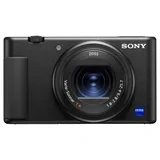
Sony ZV-1
Brilliant little camera – PROS: It takes superb video, focuses superquick, offers great sound and is excellent for stable shooting too. For the size, unequalled. CONS -… Read more
Battery life isn't great, and it could do with a touchscreen not all-button operation. Still think it's great value for money though.

Sony Cyber-shot RX10 IV
The Sony RX10iv in many ways is the best camera answer of all time for me – I knew it would be good from all the reviews I have studied. It has some unique features that aren’t available in other form factors at this price… Read more
point. It is commonly stated that it’s expensive. But expensive compared to what? It has a 24-600mm lens which cleverly adapts to 1200mm with something Sony call ‘clear image zoom’. At 1200mm there is no degradation of quality which is generally pretty stunning across the whole zoom range. Video either in HD or 4k is really, really good. I also bought an inexpensive ultra wide angle adapter and there is no degradation of quality, except that it vignettes slightly at the widest end. But I can sort this out with editing software. Fortunately there is a tiny crop in 4k and there is no vignetting with the ultra wide angle adapter which is handy. 24mm is considered wide but getting it under 20mm for me is the holy grail. The Sony autofocus system is as good as it gets. 2-3 years ago there was no such thing but now you really can be a one man film crew. Sony don’t have fully articulated screens for self videography but the wifi/nfc/Bluetooth works well to use a mobile phone as a viewing screen. This camera has a killer feature being proxy recordings for 4k video. This covers off on the price of admission in so many ways and is ultimately why I bought it, even though I have a similar duplicate Panasonic camera. The only thing the Sony RX10iv doesn’t have is a built-in ND filter. I purchased a screw on after market nd filter and I am not as confident it will autofocus 100% of the time. But everything has a work around so I am investing the time to learn the best ways to use it as is. The Sony menu takes time to learn and set up properly on the custom menus and buttons. But during that process I learnt all about the camera to make quick and efficient changes. Most other cameras are using touch screens for all sorts of adjustments but with this Sony you can only use it for autofocus. But the customizability is done differently on a Sony and I have quickly gotten used to it. I bought it mainly for video even though I have been photographically centric in the past. This camera is so versatile for photography in a way that a much more expensive dslr or mobile phone could every be. The zoom lens is kind of brilliant. The 24 frames per second shooting capability has to be experienced to be believed. HDR photos are super impressive. Being a one inch sensor theoretically means it is not optimized for low light photography but learning to use it, suggests to me I am going to get some sensational low light results if I need them. I have seen plenty of youtube videos that have convinced me of that. Ultimately it is getting back to the quality of lens that makes this camera special and from a price point of view, for the quality of the output, it is much much cheaper than a good dslr with multiple lenses. Having said all of that, I have no need of the 600mm end of the lens ... or do I now that it has opened up a whole new world to me? I have done distant photography and test videos of all manner of fast moving cars, people and architecture and I am really happy with the prospect of how my photography will evolve. In the past I have had multiple lenses for dslr and micro 4/3 cameras and I have never used them because it’s a pain with lots of equipment. But in the Sony RX10iv it’s all in the one camera and it does everything very well. And yes, it’s a bridge camera which is not associated with professional work. But I can see how this can be used professionally so it’s a keeper and a steal for what it does. Yes you can buy cheap cameras and really good mobile phones like a Galaxy S9 which I use all the time for professional web based photography. The S9 for me is amazing but it can’t cover all the bases like the Sony RX10iv does.

Sony Alpha 7R V
Unleash Your Creative Vision – The Sony A7RV camera is a groundbreaking addition to Sony's esteemed Alpha series, setting a new standard for professional-grade mirrorless cameras.… Read more
Designed to meet the demands of photographers and videographers alike, this cutting-edge camera offers unparalleled image quality, versatility, and performance.
At the heart of the Sony A7RV is its remarkable 61-megapixel full-frame sensor, which delivers breathtakingly detailed images with stunning clarity and dynamic range. Whether you're capturing landscapes, portraits, or action shots, every frame is rendered with exquisite precision and lifelike color reproduction.
Beyond its impressive resolution, the A7RV boasts advanced autofocus capabilities, thanks to Sony's renowned Real-time Eye AF and Tracking AF technology. This ensures tack-sharp focus on subjects, even in challenging shooting conditions, allowing you to confidently capture fleeting moments with precision and accuracy.
Videographers will appreciate the A7RV's 4K recording capabilities, which produce cinematic-quality footage with remarkable clarity and detail. With support for multiple recording formats and frame rates, including 10-bit 4:2:2 color depth and S-Log3 gamma, the A7RV offers unparalleled flexibility for professional filmmaking projects.
The camera's ergonomic design and intuitive controls make it a joy to use in the field, while its robust weather-sealed construction ensures reliability in any environment. The high-resolution electronic viewfinder and tilting touchscreen display provide a seamless shooting experience, whether composing images at eye level or from creative angles.
Furthermore, the A7RV's extensive connectivity options, including Wi-Fi, Bluetooth, and USB-C, enable seamless integration with a range of accessories and workflow solutions. Whether you're transferring files wirelessly to your smartphone or tethering to a computer for studio shoots, the A7RV streamlines your workflow with ease.
In conclusion, the Sony A7RV camera is a game-changer for professionals and enthusiasts alike, offering uncompromising image quality, advanced features, and unmatched versatility in a compact and portable package. Whether you're a photographer, videographer, or content creator, the A7RV empowers you to push the boundaries of your creativity and capture moments with unparalleled precision and clarity.
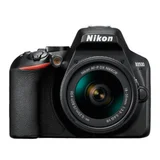
Nikon D3500
If you're looking for a lightweight dslr this is the best, because it has a real optical viewfinder. Every other camera is either heavier, or compromises on a feature. I recommend the kit lens it comes with or the older 35mm af-s lens.

Canon EOS R5 C
Once again CCC WAREHOUSE have not failed to disappoint. Canon R5C was delivered on time before Easter hols. Product works fine, delivered by DHL and in excellent packing at a competitive price too. Thank you Michael and Andy. Show details
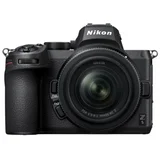
Nikon Z 5
Love this camera! – Awesome features, takes great photos and is exactly what I wanted in a camera! Show details

SJCAM C200
I recently got my hands on the SJCAM C200 action camera, and it's been a game-changer. The 4K video quality is outstanding, capturing every detail… Read more
vividly. What truly impressed me is its low-light performance. Even in dimly lit environments, the footage comes out clear and noise-free. The camera is also easy to operate, with intuitive controls. The wide-angle lens allows me to capture vast scenes, perfect for my outdoor adventures. Overall, the SJCAM C200 is a great value for the price, and I highly recommend it to anyone looking for a reliable action camera.

SJCAM A10 Body Camera
Super cool – You can do just about anything with this whether you want to video or just take pictures easy to use, when it came, it already had a charge on it, so I was able to play with it, I would recommend this family and friends.

Akaso EK7000 Pro WiFi Action Camera Ultra HD
I bought the Akaso ek7000pro 12 days ago. So far, everything is working perfectly. I am quite surprised how sharp and clear the video is. I have it… Read more
mounted on my motorcycle helmet and was genuinely shocked regarding the flawless video at 4k, even while purposely flailing my helmet all about. I am only going to give 4 stars for now, as I am yet learn how long the batteries last.
Types of digital cameras
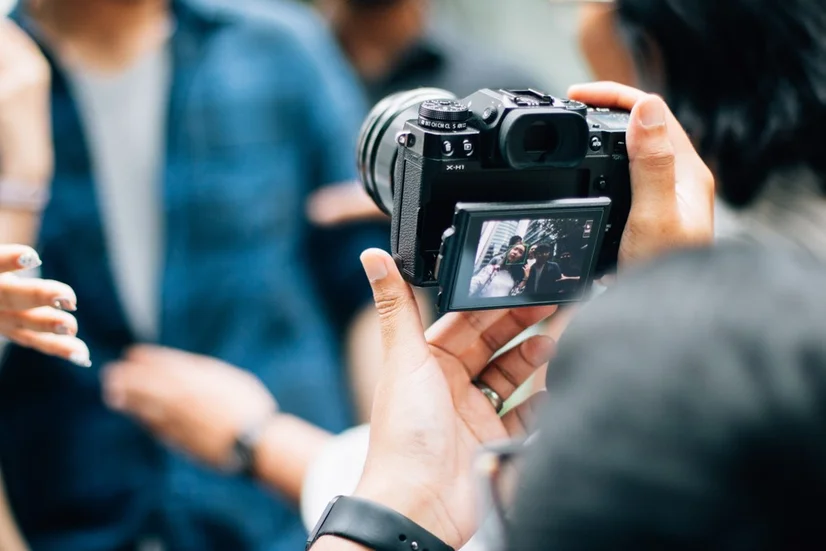
Compact cameras · See All
Compact digital cameras are small (usually enough to fit in your pocket) and portable, and generally have basic features that make them great for casual use or for those who aren’t all too fussed about taking very high-quality pictures. Because of their simple operation and lack of advanced features, they’re also referred to as ‘point and shoot’ cameras.
These cameras have fixed lenses, however different models come with different features, with some even having advanced features like long zooms and full manual controls.
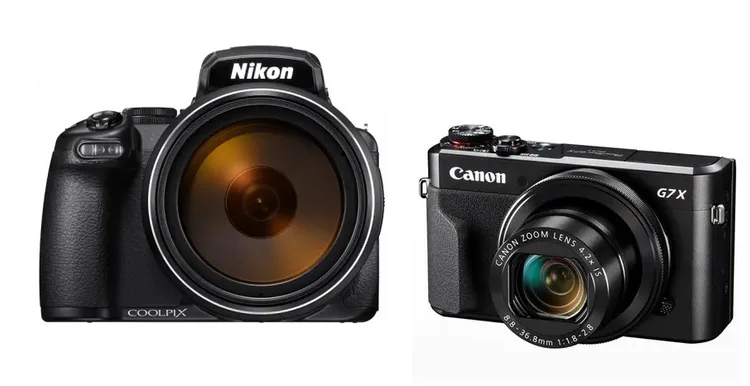
Some compact cameras are more compact than others. On the left is the Nikon Coolpix P1000, on the right is the Canon Powershot G7X II.
DSLR cameras · See All
DSLR (digital single-lens reflex) cameras work by light hitting a mirror inside the body angled at 45°, which then goes straight up into the optical viewfinder which lets you see exactly what the lens is seeing. When you take a photo, the mirror moves out of the way, revealing the image sensor.
Mirrorless cameras · See All
Mirrorless cameras don’t have the system of mirrors you’d find in a DSLR, and because of this, don’t have an optical viewfinder. This means you’re not seeing exactly what the lens sees, but what the imaging sensor sees, so you’ll see - either through the LCD screen or an electronic viewfinder - exactly what will be captured.
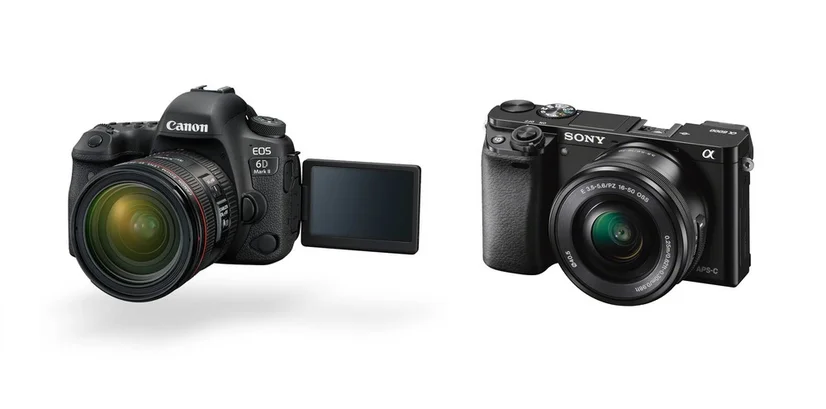
On the left: the Canon EOS 6D Mk II DSLR Camera. On the right: the Sony Alpha 6000 Mirrorless Camera.
Action cameras · See All
Action cameras, like GoPro cameras, are generally smaller, water and weatherproof cameras that have some kind of housing that protects them even when they’re dropped, knocked, or tossed around. They have a more rugged design and are primarily used for capturing video, usually for outdoor and adventure sports.
Video cameras · See All
Video cameras (or camcorders) are primarily used for recording video. You can find compact video cameras right through to larger, professional video cameras.
What to look for in a digital camera
Size and weight
Whether you’re a casual photo-taker or a pro, a camera’s size and weight will affect how - and if - you use your camera. Going for a DSLR when you just want to take some photos on the odd getaway may make you less inclined to actually take your camera out - and you might miss important moments in the process.
Ease of use
You should also consider the controls, making sure that buttons, switches, and dials are ergonomic and easy to use. Many cameras will have an LCD touchscreen which can make them more user-friendly.
Those looking for an action camera should also look for automatic features; the less you have to do while you’re on the move, the better.
Image quality
Megapixels are often mentioned in camera ads; this number indicates how fine the resolution will be in a final photo, but you generally won’t need more than 16 megapixels unless you’re getting your photos turned into large prints.
Other features that affect image quality include:
- Shutter speed. Slow shutter speeds enable you to take photos at night without flash, while fast shutter speeds let you take photos that focus on moving objects. Look for a camera that offers a wide range of shutter speeds to be able to take both.
- Aperture (f-stops). Aperture is an opening in the lens that controls how much light comes into your camera. Changing the aperture lets you brighten or darken an image without changing the shutter speed as well as change the depth of field (the level of clarity or blurriness of different elements in a photo).
- White balance. This is a process of adjusting colours to make lighting in your images more natural, which is particularly useful if you’re shooting with artificial light.
Sensor size
The size of the image sensor in a camera determines how much light it uses to create an image - a bigger sensor will therefore produce better images. These days, manufacturers are even making smartphones and compact cameras with larger sensors, so this isn’t only a consideration for those in the market for a mirrorless or DSLR camera.
Features
Digital cameras can come with a host of features that can help make your camera easier to use or help you produce “better” images.
- Wi-Fi: This lets you wirelessly send photos from your camera to your smartphone, tablet, or other device.
- Self-timer: delays the shutter, and is most often used to let users set up the camera and then jump into the frame to take a photo of themselves.
- Raw mode: lets you capture uncompressed data from the image sensor in your camera - most professional photographers shoot in RAW because it lets them work with all the raw elements of a photo in post-processing. The trade-off is that RAW files are much larger than JPEG files.
- Digital zoom: enlarges pixels in the centre of a photo and crops out the rest, which makes it look like the subject is magnified. This will also lower the image quality.
- Auto focus: adjusts the lens to automatically focus on a subject, so that you don’t have to do it manually.
- Digital image stabilisation: is software in a camera that prevents the occurrence of blurred images caused by camera shake or poor lighting, and is handy when shooting during sunrise and sunset, indoors, or without a tripod.
- Eye-tracking focus: picks up your subject’s eyes and tracks them as they move around the frame, keeping them in focus.
- In-body image stabilisation: (also called optical image stabilisation) has the same effect as digital image stabilisation, however does this using mechanical gyroscopes that move the lens to stabilise the image while you’re shooting. This is generally more effective than digital image stabilisation.
Video capability
Even if you’re not in the market for a video or action camera, there are some specs to look out for if you think you’ll be recording video at any point.
The higher the resolution, the more detail you can record. Available options include HD (720p), Full HD (1080p), and 4K (2160p), with 4K being able to record exceptional clarity.
You should also consider frame rates; the higher the frame rate, the smoother your video recordings will be. A high frame rate, for example of over 120fps, will also let you capture slow motion footage. The higher resolution you shoot at, however, may mean you’ll have to sacrifice a higher frame rate.
Accessories
Cameras that are compatible with different accessories can help you customise how you like to shoot. However, you’ll need to check the type of mounts that your camera uses - if you already have some DSLR lenses, you won’t be able to put them on a mirrorless model.
Some manufacturers sell converters that let you attach different lens types, but this often means that other features of your lens or body may take a hit.
Common accessories include:
- Lenses: Popular lenses include fixed-length, wide angle, zoom, and macro lenses.
- External flash: This is more powerful than a camera’s built-in flash and gives users more control over light levels, as you can angle it in different ways depending on your desired effect. It also gets rid of that pesky red-eye.
- Tripod: These are useful if you’re recording video or shooting with a telephoto lens. Most decent digital cameras can be mounted to a tripod.
Cost
You can get basic and advanced models for all camera types, which means that how much you fork out for a camera can vary a lot. For example, an entry-level mirrorless camera will be cheaper than a premium point and shoot.
Expect to pay:
- Compact cameras: entry-level models in the $100 to $200 range, while more advanced point and shoots start at around $500 but can cost over $1000.
- DSLR cameras (body only): $600 to $2000, with professional quality models sometimes starting at around $6000.
- Mirrorless cameras (body only): $600 to upwards of $1500.
- Video cameras: $200 for compact handycams to over $2000 for advanced models.
- Action cameras: between $60 and $600, with more premium models available.