
Hyundai i30 PD Hatchback (2017-2026)
VerifiedAlso referred to as: Hyundai i30 PD Hatchback 2025 and Hyundai i30 PD Hatchback 2027.110 reviews


I am writing this review to document the cumulative failures that have characterised my five-year ownership of a Hyundai and, more recently, the conduct of the McGrath Liverpool dealership and Hyundai Australia’s head office. From the outset, the vehicle has been plagued by recurring clutch-related faults, battery faults amongst many others that… Read more
are widely acknowledged in technical service bulletins for this model year Hyundai N Line Premium (PY 2019) (MY 2020). Rather than addressing these documented defects, I have been met with denial and condescension, as though the problems were a figment of my imagination.
For the past fortnight I have been assured—three separate times—that the vehicle would be ready for collection “tomorrow.” Each assurance required me to take a full day off work. On every occasion the car was not ready, and no proactive communication was provided.
I was also promised a loan vehicle; that undertaking was simply abandoned without notice. When I attempted to follow up, the customer-experience team had already closed for the day.
What compounds the frustration is the orchestrated deflection between the dealership’s service manager and Hyundai’s head office. Liverpool now insist they attempted to contact me today at 11 AM which is false, yet head office did not question this or ask for call logs. My phone logs show otherwise. This coordinated misrepresentation is unprofessional and deeply disrespectful.
This experience has cost me leave days, income, and any remaining confidence in the brand. I had been on the verge of upgrading to a new Hyundai N through novated leasing; that decision has been reversed. I cannot, in good conscience, recommend Hyundai—or McGrath Liverpool—to anyone seeking reliable product support or honest dealing.
After five years of persistent faults and the recent display of institutional dishonesty, I am left with no alternative but to dissociate myself from the brand entirely. Prospective buyers should be aware: Hyundai’s after-sales culture appears more concerned with deflecting blame than solving problems.

The map on these cars is horrible and the speed is never right sometimes showing more or less than the road toll limit I told Hyundai about it why doesn't the cars built in maps navigate properly it's not user friendly I expected better navigation settings without having to attach my phone

Hyundai i30N Hatchback- 2024 model First impressions brilliant. Amazing Performance & handling & that exhaust note is on another level. The only thing unfortunately that lets the experience down is the Hyundai service as mentioned regularly on other reviews & media outlets. Would I recommend you to buy one Absolutely..BUT service the vehicle with a reputable service centre NOT Hyundai if you want peace of mind & hassle free experience. Show details
Reviews with attachments
- +8


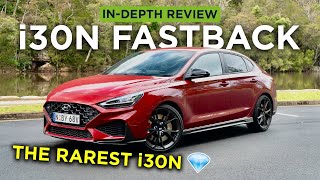
Only worth buying if you like how it looks...otherwise just get a i30N hatch – There was no noticeable difference between the build quality of the Fastback versus the hatchback or even the sedan. The sports bucket seats, upgraded performance pieces, bodykit and trim all fit nicely together and are exactly what you’d expect for the price you’re paying. The starting price for the i30 Fastback N is $49,000 before on-road… Read more
costs for the manual, and $52,000 for the dual-clutch automatic pictured here.
For a 200+kW, front-wheel drive hot hatch, it’s a fair price for the equipment and performance you’re getting in return.
Hyundai offers its 5 year/unlimited kilometre warranty with the i30N, with services being capped over this period. Service intervals are 10,000km or 1 year.
Plus, if anything mechanical fails during a track day, Hyundai won’t void your warranty claim, thanks to an included track day warranty.
Prepaid servicing plans can be purchased for 3 years/30,000km for $1,005, 4 years/40,000km for $1,340 or 5 years/50,000km for $1675.
One word comes to mind when driving in the i30 Fastback N: rambunctious.
At low speeds, there’s a deep rumble emanating from those massive cannon exhausts. Turn the car on to the full fat N mode, and you’ll have this car producing pops and bangs exceeding 100dB!
It’s so loud that an owner in the United States was pulled over and fined for having an excessively loud exhaust, even though it comes from the factory like that.
The maximum power output from the 2.0L turbocharged four-cylinder unit is 206kW (276hp) and 392Nm in overboost. Also, the 0-100km/h time is claimed to be just 5.4 seconds!
This thing feels quick. The turbo is quick to spool and you always feel like you have more than enough power at your disposal.
Traction is my only issue here; there’s only so much you can do to combat front wheel slip, which can be hard to avoid when using launch control. N Grin Shift (NGS) is how you access that overboost, providing 10 seconds of more power to use to launch out of a corner, or perform a daring overtake.
There’s no denying the i30 Fastback N is a spectacular car in the handling department. Adjustable dampers allow you to avoid a constantly stiff ride, and you can even tailor the Individual drive mode to have a softer riding car without compromising on performance.
I saw fuel figures between the 10-13L per 100km mark when daily driving. The claimed fuel efficiency is 8.8L per 100km combined. It’s not the most fuel efficient hot hatch, but it’s also not going to break the petrol budget either.
The i30N Fastback has the same interior to the i30N hatch, which is all very conventional but with some sporty flair.
With the rear seats up, you’re getting more boot space than the hatchback. You’re looking at 436L of storage, and a total of 1337L with the seats folded. It doesn't get in the way of boot space, and it’s cool to see the exposed rear strut that helps keep the car more rigid.
Rear head room is impacted most due to that sloping roofline, especially when compared to the hatchback design. At 5'11", my head touches the roof if I place it against the headrest and sit upright.
If you’re in love with the design of this car, it’s absolutely worth grabbing one while you can, as this is a limited model.
If this design isn't your thing, then the hatchback is a great alternative. There isn’t that much difference between this car and the hatchback, so it all comes down to personal preference.
You can’t beat the manual transmission as an option, but if that scares you for daily driving, the DCT is an equally and somewhat superior option when it comes to performance.
If you want the fastest i30N, you’ll need to opt for the more angular sedan, which some might argue is the better alternative to the Fastback.
*Disclaimer - I work for ProductReview as their independent car and motorbike expert. I borrow new cars and motorbikes from manufacturers and owners to review. I am not paid or incentivised by these brands to post reviews. I write and create content to provide insight and information about any new or used vehicle I can get my hands on.
- +8

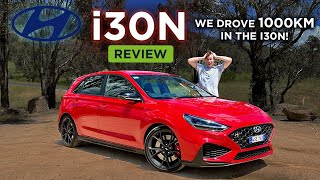
The best front wheel drive hot hatch you can buy for under $60,000 – The base i30N can be had in either manual or the new DCT for a mere $44,500 before on-road costs. I had the i30N Premium without sunroof, only available in manual, which retails for $47,500 before on-roads. You can top out the range with the i30N Premium with a sunroof, available both in the manual and DCT again, which will set you back $49,500… Read more
before on-roads.
If you want to make the most of your i30N, get the Premium. It comes with lighter forged alloy wheels that save 14.5kg to the car’s kerb weight. Additionally, the added leather and 2.2kg lighter bucket seats add even more to the cabin experience than the base cloth interior.
Hyundai offers its 5 year/unlimited kilometre warranty with the i30N, with services being capped over this period. Service intervals are 10,000km or 1 year. The i30N also is one of the only cars on sale in the world that offers a track day warranty. Meaning you can comfortably push your i30N out in the real world, without having to cover up your license plate for the track day photographer.
I’ll get the elephant out of the room and say yes, this isn’t going to be the quietest car for the highway.
After 6 hours of highway time in the N, I was a little exhausted at some parts of the drone those Michelin tires make at high and constant speeds. It’s a tire roar with what sounds like some restricted air in the wheel wells.
The engine sound itself isn’t too unique - it’s a familiar sounding inline four-cylinder note similar to what you find on many hot hatches at this price point. What makes it exciting is the very large turbo situated just centimetres away from the front occupants and the exhilarating intake sound heard under acceleration.
What brings this segment to a mighty bang is the exhaust sound. Oh my, this isn’t just your normal hot hatch, this is a unique beast. It takes advantage of a rudimentary form of anti-lag, which sends exhaust gasses back through the turbocharger when it’s usually not spinning to keep it spooled for a more rapid response.
You’re going to get complaints from the neighbours, scare little children and laugh your head off when you open up this exhaust system in it’s most aggressive setting.
The bright red N-branded calipers are not just for show, but also a show of Hyundai’s pride, seeing as these 360mm brakes have been developed in-house. This is rare for a car at this price point, as usually these brakes are easier to outsource to the likes of Brembo.
According to Hyundai, that could have driven up the price past what they wanted, and I also believe under ex-BMW M division lead, Albert Biermann, he wanted to do it in-house for more control and suitability for the car.
Here’s the juicy part. Under the bonnet is a rally car inspired 2.0L turbocharged four-cylinder unit, producing a whopping 206kW at 6,000rpm and 392Nm at 2,100-4,7000rpm.
That’s 139.4kW per tonne of power! Sure, 0-100km/h times aren’t as rapid as a Golf R or a Toyota GR Yaris, claimed at 5.9 seconds for the manual.
This torque delivery is unique too, as it’s engaged as an overboost feature, meaning instead of dumping all of your peak power mid-way through the rev range, you’re able to experience power right through to the redline. No more short shifts or awkward drops in power - the i30N’s power plant delivers more than what you’d expect for a hot hatch.
It’s still a very quick car, but it also allows you to use all of the rev range through to third gear without getting yourself into too much trouble.
There’s a trick launch control system with a customisable rpm limit, but I found it to be confusing to engage at first. Also, I will have to admit launching a front-wheel drive manual car is not the smoothest of tasks, so I found myself enjoying low-rpm launches from a stop instead.
A slick, notchy and perfectly sized manual shifter is any driver’s idea of paradise - especially when mated with over 200kW of turbocharged goodness.
There are 6 gears to choose from in this transmission, with first gear feeling slightly too short as usual for hot hatches with this much power.
Redline seems to creep up a lot quicker than you’d expect in the i30N when you get carried away, so you better make the most of those shift lights. Placed at the top of the driver’s instrument cluster, you get 5 race car inspired lights that appear incrementally and increase in colour intensity as you approach redline.
Before you have the chance to bang off the limiter, these lights all blink in unison indicating that you need to shift to the next gear.
What an awesome touch, and it’s a lot better than just an audible beep or nothing at all.
What a treat the i30N is to take on some of the best back roads in Australia. A pretty common complaint is just how heavy this car is out on the track.
The suspension in this hatch is adjustable three-ways, and it’s certainly noticeable. The softest setting is still going to be too stiff for those who like the idea of a hot hatch but really need to move on into a fast cross-over. It’s comfortable enough for myself and for passengers, and smooth enough to transport a delicate birthday cake and let my partner fall into a deep sleep - rare for many of the cars I test with her in the passenger seat.
When I want to awaken what I had for breakfast that morning, the stiffest setting works best. It’s responsive, rapid, but surprisingly not spine-shattering like the Abarth 500 is.
The mechanical limited slip e-differential works wonders to avoid the front wheels from consuming the driving experience with torque steer. Instead, it works with the front tires to put power to the road as you might hope, making the most of the power at hand rather than fighting it.
The drive modes are actually my number one selling point for the i30N, as the versatility of a car like this makes it the car that can most likely respond to any complaints one might have with a hot hatch. ‘Make it quieter!’ - sure! ‘It’s too bumpy.’ - sorted. ‘Can it do my tax return?’ - not quite.
At over 12L/100km across 1000km of driving, this is a thirsty car.
There’s a minimum of 381L available here in the i30N. That’s plenty of space for daily driving and even more. Two suitcases would fit perfectly in the back, with day bags able to be placed on top to make the most of the space back here.
Fold the seats down in a 60:40 split to reveal 1287L of boot space, and you have enough space to take a spare set of wheels and tires to the track and air them up using the 180W charge port in the rear.
I nearly had pen to paper ordering a 2019 i30N a few years ago. That should already have you assuming what my answer to the above is.
2021 has only made the i30N better: it’s more lightweight, more capable and leans even more into the sports car N brand Hyundai is quickly evolving.
In a field of competent competitors, the i30N stands out as the loudest one yet. For me, it has everything I’m looking for in a hot hatch. It’s beyond capable for my needs, it’s practical, it’s versatile and it makes me smile.
As modern day hatches get quieter, the N brand is focused on giving drivers a chance to end the petrol-era with an almighty exhaust bang.
It’s engagement at its finest, and it’s the car that transformed my feelings for Hyundai from a brand that’s a bit meh to a brand that clearly is trying its hardest to produce the best products that you and I can afford. The plan seems to be working, and the i30N underscores that purpose.
*Disclaimer - I work for ProductReview as their independent car and motorbike expert. I borrow new cars and motorbikes from manufacturers and owners to review. I am not paid or incentivised by these brands to post reviews. I write and create content to provide insight and information about any new or used vehicle I can get my hands on.
- +8

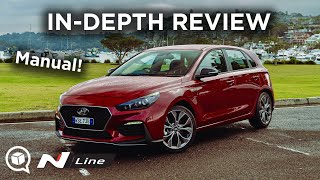
Practical and fun to drive. Great for aspiring hot hatch owners – I was thoroughly impressed with the build quality of Hyundai’s popular mid-sized hatchback. Sure, you’re immediately going to notice a lot of cheaper materials, however it’s just cheaper to touch - the actual fit and finish on the inside is well executed. The major touch points, like the doors, shifter and steering wheel are all dressed in soft… Read more
leather which feels premium, and helps justify a price increase over the cheaper models.
Seats were the highlight here, with an N badge embossed into the backrest, helping lift the overall sporty feel of this interior.
On the outside, the main quirk was the panel gap between the bonnet and front bumper that was filled in with a rubber gasket, something found on all i30’s of this generation. Not a negative aspect, however it doesn’t scream accuracy in panel fitment on the outside.
The i30 range starts off at $25,490 drive away, whereas the i30 N Line hatch starts from $33,112.
The range can go all the way up to the i30 N-Line Premium, which maxes out at $38,056 (before you’re shopping for the far more expensive and more powerful i30N).
For your money, you’re getting an interior and exterior upgrade from the N department, with sporty front grills, side skirts, grippy Michelin tires, upgraded wheels and a dual exit exhaust.
On the inside, there are N-inspired bucket seats, steering wheel, pedals, shifter and floor mats. There’s also a 8-inch centre infotainment paired with a half analogue, half digital driver’s display.
Finally, it’s topped off with 150kW, 265Nm from a 1.6L petrol four cylinder and sports-tuned suspension. For $33,112, it’s a great deal for those who want a bit more power and sporty flair packaged into a medium sized hatch. However, you’ll have to pay a little extra if you don’t like driving a stick.
Hyundai ships the i30 N Line with a 5 year/unlimited km warranty.
Servicing for the i30 can be prepaid up to 5 years or up to 50,000kms, costing a total of $1,385 for 5 services. Most people won’t be travelling more than 10,000km a year, so that means yearly servicing will cost $277.
Surprisingly, you’re met with a quaint and quiet cabin, despite opting for a more ‘sporty’ hatch over the standard car.
On the outside, you do get a more raspy and active sounding exhaust producing plenty of performance noises. Only issue is, you rarely get to hear this exhaust from the inside, aside from the occasional pop when revving.
I guess having a quieter cabin is part of the N Line hatch’s appeal, as you’d be shopping for a hot hatch if you really wanted more performance theatre. Less external noise entering the cabin allows you to relax during the daily commute and over longer trips.
I found the audio system to be just fine - it’se clear and loud enough for daily listening. However, it wasn’t mind-blowing or particularly deep in its sound.
The braking ability of the i30 N Line hatch was as expected for a medium sized hatchback. The car looks sporty, but you’re not going to find these brakes fulfilling the hot hatch vibe this car is trying to portray.
The appeal of the i30 N Line is the power bump it receives over the standard range.
This hatch is packing Hyundai’s familiar 1.6L turbocharged inline four-cylinder petrol engine, producing 150kW at 6000rpm and 265Nm at 1500-4500rpm.
As this is the manual, you’ve got six speeds to choose from, which is all fairly standard.
The power produced by the i30 N Line isn’t exactly adrenaline inducing, but it does produce enough performance to make this i30 fun to drive.
In reality, you don’t need more power than what’s given here. You’ll get up to speed more than quick enough, and you’ll be able to conduct clean overtakes out in the country.
Off-the-line acceleration is hampered by the exclusive drive to the front wheels, as you’re met with the typical wheel-chirp of rubber failing to grip onto the road after the initial launch.
It’s the involvement required when using a manual transmission that gives you little reward over the dual clutch. Some manuals are absolutely worth the pain they provide in being a little more effort than an automatic, but I’m not so sure this particular transmission is.
I do believe that the manual provides more ‘fun’, but I found that it was a bit more effort than the dual clutch when I just wanted to run to the shops, or somewhere close.
The N Line gets a ‘performance-oriented’ suspension and handling tune, in the form of stiffer springs, bigger wheels and Michelin Pilot Sport tires.
It’s a greatly appreciated improvement over a more comfort-orientated setup.
The best part is, the suspension here isn’t back breaking - but instead it’s designed to limit body roll and sway through corners.
Hyundai claims a combined fuel efficiency figure of around 7.1L per 100km.
I saw figures cross 10L/100km while driving around town in this warm hatch, which was partly due to me operating the manual transmission as I’d hoped an aspiring hot hatch owner would.
The i30 N Line hatchback has a minimum of 395L of boot space.
Seats fold in a 60:40 split, meaning you can still carry up to 4 people, while one seat is folded.
If you need to move some items from IKEA, you can fold all the seats down for a total usable space of 1301L.
I’d say in this base i30 N Line trim, with a manual, you’re going to have most of the fun you’d find in a hot hatch, especially when rowing out your own gears.
However it does have to be said that the full fat enjoyment that you’d get out of a proper hot hatch is something that you’ll only find in the $48,000 i30N.
*Disclaimer - I work for ProductReview as their independent car and motorbike expert. I borrow new cars and motorbikes from manufacturers and owners to review. I am not paid or incentivised by these brands to post reviews. I write and create content to provide insight and information about any new or used vehicle I can get my hands on.

Smooth driving – It has a spacious boot load capacity and the features are very useful and it’s recommended for a family who loves travelling even in long trips carrying a lot of baggage. Show details
Positive reviews

Why would you buy golf over this – Excellent chassis, excellent engine, excellent DCT transmission. And my assessment is from 6 years of ownership of daily drive both city and highway. PD i30 has proven itself for its excellent chassis for quite a while, so I don't need to regurgitate on it. What makes even more excellent is N line (or SR which was called for 2017-2018 models)… Read more
comes with independent rear suspension as well. This is a major advantage over its competitors from other nationalities who sneakily switch to cheap torsion beam.
Gamma 1.6T engine also has proven its performance and reliability, and I do agree with it from my own experience too.
7 speed dry clutch DCT is excellent. Hyundai actually did a good job on it and I love it. People who complain about DCT have no idea, they think DCT=torque converter auto transmission and expect it to behave like torque converter auto. Please people, DCT is a manual transmission controlled by a computer so you should expect manual gearbox characteristics! Would you complain that the gearbox is not as buttery smooth at low speed as torque converter when you drive a manual car? Being dry clutch I love the feeling of direct connection knowing there is no loss of power in the process, as well as the reliability for having fewer things to go wrong than the wet clutch system. Yes it can handle less torque than the wet clutch but with the Gamma 1.6T's torque range, it's enough and there is no issue. Best of both worlds having efficient and fast gearshifts with automated clutch operation. After all, that is why the DCT was introduced to the mainstream cars, and I am the exact fit and I thoroughly enjoy it.

rock solid – Had mine about 5 yrs 95k haven't spent a cent on it other than servicing - not even the brakes. The power/torque figures for this car are almost identical to an old 202 6 cylinder so to me it goes like a rocket except if caught with low revs before the turbo comes in. Sometimes your driving style will need to remember but it is rarely a problem for me. Show details


Very competent hatch – I hired i30 hatch 2021 with 21k on odometer for week. Interior black, door plastic marked easy, variable cruise control, large infotainment screen, 6 speakers which were ok, but did need to increase base. Seating position ok but could could not quite reach info screen, don’t touch while driving , use steering wheel controls instead. HVAC controls… Read more
were small, don’t touch while driving. Got 6.6L fuel economy on 80% freeway driving, excellent. 6 Speed auto always found right gear, in normal mode. Other driving modes Eco early gear changes, ignore it, sport mode holds gears higher rpm ok for hilly conditions. The normal mode is fine holds gears and slows vehicle down. Engine sounds like vacuum cleaner at high rpm, very funny, tyres are ok but reflect road surface some noise gets into cabin. Screen menu in front of driver is good, changes to stalks show on the screen , very surprising. Steering wheel controls intuitive and easy to use. Drivers seat ok cushion a fraction short for 5’10 bloke, but can live with it because the seat is very adjustable. Overall good unit.
Negative reviews

Turbo Hyundai – Not bad for the price although the auto gearbox isn't the best, I don't think they come out with a manual option, a manual version would almost be perfect Show details

Failure to support electronic after 4 years – Purchased new in 2016 the car itself has operated will. Had a problem with the moon roof which was finally fixed on its last warrant service. The Problem is the Satnav system. Hyundai only support updates for the Satnav until 2020. 4 years of updates is terrible. Show details

Engine failed – Complete engine failure at only 96,000kms. The car was purchased brand new and regularly serviced. I encourage anyone considering a car to research engine failures. The car should have been good for another 200,000km and is now worthless. Off to the scrap yard. Show details

Find out how Hyundai i30 PD Hatchback compares to other Hatchbacks
Know better, choose better.
Recent reviews

Bad design and all new i30s have this problem – Front wipers can't be lifted with out damage to the bonnet and paint Show details · 3

Terrible car, a lemon I'm afraid – Bought i39 NLine Premium with sunroof Feb 2024 In first month had 3 separate instances when steering wheel locks up. A power off and restart cleared this issue and took car into Hyundai for service check (less than 2000 kms). Hyundai service said they couldn't find anything wrong. Yesterday, the car locked the steering wheel but it couldn't be… Read more
reset. Called RACQ roadside help. They did what they could but no luck. Car undrivable and was towed away. Will see what dealer does but in any case my wife and I don't feel safe driving a car which can lock the steering without notice. If we had been on a motorway at 100, we could be dead now. Terrible experience so far.


HYUNDAI I30 – Very efficient on fuel, great connection for blue tooth on bot Android and Apple, quiet on the highway, everything is very accessible and easy to use for a great price.Great 1st car

Great economical car – Great comfortable car without all the annoying bells and whistles of modern cars.fuel economy is great,getting between 4.9 and 5.1litres per 100 klms on a trip.service required every 15000 klms and averages about $300.00 per service Show details


This is my dream car – My car is now 4 years old but still like new. I haven't had a single issue with it and Hyundai customer service is excellent. It has great fuel economy and really takes off, unlike my previous i30. I really love having the panoramic roof and the heated and cooled seats and use both quite often. The only other thing I wish it had is blind spot… Read more
detector, but I can live without it and it has much more features than other cars in that price range. I will probably buy another i30 after this as I haven't found a car I prefer

Car is okay to run but the promised map software upgrade never happened -- services department not doing the job – I bought a i30 elite 2019 2.0L and have been using it for 4 years now, the car is doing what it supposed to do, minor issue like the eco mode does not hold after restart. The major thing I don't like Hyundai is the misleading about the Sat Nav upgrade plan, it clearly displayed on the "servicing" webpage, but within this 4 years of services, it has never been touched and done, even each time I requested it. Shame! Show details

Brilliant – Absolutely no problems, I've had 3 i30s (1 was a 2010, 2015 and 2018) as driving school cars. Absolutely first rate with no problems. Clocking up huge KMs. 480km, 365kms and current 210km. Would recommend any year . Always Serviced on time Show details

Good but could be better – I purchased my 2020 Nline one under the top of the range model. Bad- after 2 years when unclipped the passengers visor the plastic snapped off in its holder, Hyundai have refused to repair and I am currently going through fair trading for a $380 clip. Of the mark the car lags, this has been dangerous in traffic as its take of is unpredictable in… Read more
heavy traffic when you need it to be quick of the mark. Driving on the Freeway, the noise on some surfaces is way to loud, in owing 13 cars this has been the noisier of all. For leg room if you in the front no problems however the back seat is squishy which makes transporting teens tricker. Engine runs rough at times and sounds like it skips, Hyundai ran diagnostic and said its fine however this continues to be a issue. Good Interior is beautiful, the red accents add a lovely touch of detail. Fuel For in town driving I get around 6.9L per 100Km which is great. Bootsize fits my German Shepherd in with ease. I use my car for city driving for work and then every couple of months for a 2 hour trip to visit family, it does ok but luggage space is a bit tight. The car is serviced at the recommended times which is approx every 6mths.

Hyundai service costings – I have had my car for a few years now and am generally quite satisfied with it. I recently drove a Toyota new car and was most impressed with the better overall quality of that car My gripe with Hyandi is their costs on parts and servicing after the warranty has expired. My wife recently took our car to replace a brake light bulb and was quoted… Read more
$70 to replace it. The light bulb costs less than $10 and it takes less than 5 minutes to replace. I have also had other issues and was quoted ridiculous prices to repair something which you would think would cost less than $300 for the part and labor. They quoted well over a $1000 for the repair . It absolutely threw me of their costings .I will never go near a Hyundai again
Find out how Hyundai i30 PD Hatchback compares to other Hatchbacks
Know better, choose better.

Still under warranty but engine seized – Car used for Work and family visit. Service Was getting done on time every year. I just done my car service one month ago and engine seized while I was driving on highway and hydraulic system fail too.terrible experience. Hyundai dealer told us it’s not manufacture default because little stone hit underneath the car bonnet and damage engine.car written off only 17000 km drove off. Show details

Decent small car for small family – The usual use of the car are for, Commuting to work, family transport, and travelling to sport venues. Usage: 6/7 days weekly No turbo cars are serviced yearly once every 12 months Show details

Decent car, but a few annoyances – I’ll be completely upfront and say I only rented this for four days. It had about 20,000 km on the clock. It was very comfortable. I was able to adjust the seat and steering wheel just right for my 186 cm frame. It drove smoothly and quietly, but the steering lacked any feedback whatsoever. No feeling at all, which is a bit disconcerting… Read more
whenever you are fiddling with the heater controls and suddenly, every time, the lane keep assist cuts in.
I didn’t like the ‘smart cruise control’, particularly because dumb cruise control isn’t available. With the i30’s smart cruise control, you have to have lane keep assist and forward collision warning engaged in order to use cruise control at all.
I found the forward collision warning reacted to the bottom of hills, so obviously I didn’t want it on. I also found the lane keep assist to intrusive - I prefer driving closer to the fog line.
It was also particularly annoying that you have to be stopped to disengage these functions and they reset to “on” every time you restart the car.
It was an okay car overall, but the Corolla I rented in 2019 that had similar features was more user friendly and gave more steering wheel feedback.


A fun car to drive – Mainly for work. Otherwise, shopping and off to see family that live far away. Much more fuel efficient than my Ford Ranger. Other than some issues. It's a good car to drive. Show details

Great car. Battery died after 1.5 yrs, but Hyundai roadside assist (RACV) replaced it under warranty – Great car. Battery died after 1.5 yrs, but Hyundai roadside assist (RACV) replaced it under warranty. Sound system is not great, but it's passable. Other than that, I had a rattling noise, which was the heat shielding, which got fixed. Great car. Show details

Disappointing Purchase – Faulty Transmission – After purchasing my first brand new motor vehicle (Hyundai i30 Manual N-Line 2022 Model) to be used as my daily commuter I was very excited. However, in less than 24hrs the vehicle suffered a major mechanical fault in the transmission rendering the car unfit to drive. Since then, the process to exercise my rights as a consumer in accordance… Read more
with the ACL has been frustrating and drawn out to over 5 weeks and is still ongoing.
I have been left very disappointed in the purchase of this vehicle from this manufacture and would cautions others to seriously think twice before making the same mistake.

A driving pleasure and pleasing on the eyes! – Fuel efficient and surprisingly powerful, the i30N Hatchback provides superb comfort and driving pleasure with the bonus of being able to squeeze into those narrow city parks. There are only two minor issues that I have noticed, both only being an issue with certain additionals. The i30N seems to have a little difficulty engaging into reverse in a… Read more
manual, nothing major, just need to slightly release the clutch to ensure full engagement. The other issue is having a tow bar confuses the reversing sensor a bit. Luckily they are very easy to take in and out as required. Overall very pleased with my purchase and this car has got me into buying Hyundai in the future. If you want a balance between power, cost, comfort, and style then the i30N is for you.

There's better out there – So I've had my PD.V4 i30 Elite Hatch for over a year now and I've come to the opinion that at well over twice the price of an Accent Sport it's definitely not twice the car. My opinion is the Accent was the better built, nicer car to drive than the portly i30. What I've observed with my i30 are: 1. Construction of the car is very average. My… Read more
opinion is at best it's similar to a late 90's / early 2000's locally built car with panel alignment in places visibly out by mm (Eg. Bonnet was striking the driver's side headlight at delivery). Anything on the car that wasn't machine built is rough. 2. Warranty isn't the much advertised Hyundai five years (Eg. The warranty on the paint is only one year). There were other caveats throughout the contract which were very disappointing that were only pointed out when handed the documents to sign when picking up the car. 3. ABS can't be fully relied upon as it can be fooled by road conditions with much reduced braking which “feels” like the front brakes aren't working. Also worth noting there was no pulsing from ABS when activated through the brake pedal as per older ABS that I've used. So far the ABS issue has happened twice with different brand, and therefore tread pattern, of front tyres which does not give full confidence the brakes will work when absolutely needed. The two cases were: a) First time the cause was a small patch of dry small round pebbles and dust on bitumen at around 30 kph while driving in a straight line. Very little braking effort from the car even when I was absolutely mashing the brake pedal per advice when driving a car with ABS. Braking did not recover at all and I barely missed a bus by ½ a metre at best. b) Second instance again a small patch but this time of wet leaves in shade on most dry bitumen travelling at around 70 kph. Again the front brakes did not recover. Saving grace was it was 99% dry tarmac so the corner I was braking for was just do-able because of the very large 225 by 17 tyres. 4. The brakes themselves are very strong and fade free when they decide to work yet they do not inspire confidence as they have a noticeable pause on take up which means I'm pushing on the pedal just that slightly earlier so I know I have braking under reasonable control. When being used the brake pedal is a slightly spongy to use so that means the brakes are not easy to modulate for precise control. Checking the area around the rear wheels this could be because of the very long length of the flexible couplings used from the body to the suspension. The rear flexible couplings are mounted at the far rear end of the suspension arm direct to the body in a very long and in a highly exposed location. My expectation is dirt roads and the inherent thrown up rocks will not be kind to the long rear flexible brake hoses on i30's. 5. Speedometer is in-accurate, mostly it reads 4 kph fast. In my car 44 is 40, 54 is 50, 64 is 60, 74 is 70, 84 is 80, 94 is 90, 104 is 100, and 115 is 110. The error has been checked against two separate GPS devices. 6. Active cruise control while quite powerful and has many useful features including smoothly letting in traffic merge into the gap it leaves from the car in-front but it can be fooled by the local situation. Some examples include: a) Hard shadows from an overpass may have it slowing down. b) Trees growing over the top of the road in that beautiful picturesque arc seen in so many photos have the i30 slightly on/off the throttle giving a nauseating minor pulsing to the car's progress which is highly visible as modulating and higher fuel consumption on an OBD II scanner. c) Parked cars on both sides of a bi-directional standard 50 kph suburban roadway, especially at night, can have it braking heavily. d) Oncoming traffic at night in a 50 kph zone when just about to enter a slight yet very open right hand corner can have it braking heavily. e) Multiple cars parked in the front garden of a house directly in front of a slight right kink in the road can have it braking heavily. f) Changing lanes from behind slower traffic to following faster traffic where the faster traffic is overtaking the slower traffic the cruise control appears to “see” the gap between the two vehicles and accelerates into the “gap” then when further into the lane change to be following the faster traffic it sees the other faster traffic and immediately and strongly retards itself. 7. I've not had any good experience with Lane Keeping Assist (LKA). Two instances with LKA stand out in my memory: a) In the right hand lane of a three lane road coming up to an slight left hand bend in the road with large gum trees located in the centre verge. The car tried quite strongly to move to the centre lane. I used most of my lane fighting with the LKA just trying to keep the car in my lane; I don't remember if there was a vehicle in the centre lane next to me or not as I fighting so hard against the LKA to stay in my lane. b) In the left hand land of a dual lane road with an overpass directly ahead to go over another road and a slip lane to the left to divert to the road the overpass goes over. There was no traffic in front, nor next to me, and the nearest vehicle was over 100 m behind me. The LKA VERY strongly tried to take the slip road and it's was a fight to keep the car to stay in my lane and use the overpass rather than take the slip road. I turn LKA off as the behaviour to me is verging on dangerous plus detrimental to smooth fuel efficient driving. 8. Front visibility out of the i30 is way better than a hire car Corolla I've driven however like most modern cars it's poor to the rear. The rear camera, parking sensors, rear cross traffic alert, side traffic alert are all definitely needed as visibility is poor for the driver to actually be able to see out the back and rear sides of the car. Front parking sensors would also be highly useful as the front air dam is quite low and could be easily scrapped. This generally means when I park the car either I'm further back in the car park slot or I'll turn on the rear camera to identify when the lines of the park slot appear so I know I'm in the slot. 9. The front A pillars are thick enough to hide other cars especially at roundabouts plus it can hide pedestrians on pedestrian crossings. While the thick pillars are required for rollover safety it obviates primary safety of the driver being able to see other traffic while driving. To overcome the obstruction caused by the very thick A pillars I do at least a double take look and move my head to sideways but even these actions is not fully infallible and I've missed other road users. 10. Layout of the controls on the steering wheel, especially cruise control, while logical for the car is different enough from every other car to require a concerted effort to learn. The first couple of weeks will be unlearning what most other cars have for cruise control button layout including for earlier model Hyundai. 11. Usual issue of the radio being a touch screen so impossible to use while moving. Fortunately the main volume control is a rotating wheel. 12. The leather seats are cold in winter and hot, sweaty, and can burn in summer. Seat covers are a must on the front seats as is good window tinting to make the car's seats usable. 13. The “hidden” front wiper blades are ridiculous as they can only be moved to an easy accessible location by a specific action just after turning off the engine. On a dry windscreen moving the blades promotes scratching of the glass and heaven forbid if there is a failed wiper blade with the resultant scratch of the windscreen. When cleaning the car (and not having to turn the engine on for the 5 seconds to move the wiper blades which defeats the purpose of doing anything Eco) is an exercise in patience carefully lifting each blade to not hit the bonnet then clean under it and the blade itself (my thinking is the wiper blade keeps the windscreen clean but who keeps the wiper blades clean). 14. Both of the auto folding rear view mirrors for the first couple of months made horrible grinding / crunching noises as they folded in and out. Thankfully that sound has now mostly disappeared but wasn't appreciated in a new car. There's a switch to control modes so generally leave it in “out” position and only move to “auto” when not home. 15. The large “modern” LCD infotainment display is completely inconsistent with the heat / vent controls just below it. The mix of a tacked on sideways iPad like screen at the top of the dash centre and what appears to be a white fluoro display, per cars from the 1990's, for the heat/vent controls looks completely out of place. 16. The split left and right zones for the airconditioning isn't effective with the split. Bluntly, when the passenger changes their temperature it affects the driver's temperature. So each time the passenger changes their temperature that temperature change affects the driver. Changes by the driver don't affect the passenger though. 17. The electric handbrake is simple, easy, almost foolproof to use and is mostly automated but when wearing a business jacket it can be entirely frustrating to use. As I am an active driver I actively set and de-activate the handbrake so that if something happens I can hand on heart tell whomever that I had set the handbrake per the law. However, when wearing a business jacket it will drape down over and cover the electric handbrake switch. Wearing a business jacket that just happens to be that perfect length that it cannot be just pushed over to one side to access the handbrake button because the jacket will just flip back immediately. Two hands are generally required to activate the hand brake when wearing a business jacket, one to hold the jacket out of the way and the other to find and use the electric handbrake switch. This was/is so annoying in winter that I remembered it and hence why it's written up here. 18. Active brightness of dash lighting is obtuse. During the day the light level sensor considerably brightens up the dashboard lighting level which ends up being too bright. In fact during the day it's so bright for me that I dial down the brightness to the absolute lowest setting. Come dusk and the car automatically dims the dash lighting and hey presto I'm struggling to read the dashboard because I've had it at minimum. So it's fumble around to find the dash lighting control which is buried out of sight somewhere on the dash above my right knee to turn up the dash lighting. Next day the dash lighting is too bright again so I'm again reaching down to find the dash lighting control. This dim dimming behaviour gets especially annoying in winter. 19. When not set to automatic mode for headlight control the “Headlights are Off” advisory will activate often especially when turning from facing the sun then to away from the sun. The warning will occur almost everytime upon changing orientation and will do so on bright completely blue sky sunny days. Of course if the headlights are set to automatic mode the car instead turns the headlights on then shortly after realises it's error and turns the headlights off again. This behaviour is strongly detrimental to Halogen Bulb life and as they're not projector lenses they can't be retro-fitted with LED bulbs to partially overcome the longevity issue. 20. When set to automatic headlights mode the headlights auto function wants to flash the headlights on and off with every overpass or mildly dim section of road or even changing to the opposite direction to the sun on a bright day (as noted above). With the constant on / off this can confuse a driver of a car in front because it looks like the car behind is doing the old angry flash of headlights to move out of the way. Either get used to people giving you the right royal salute for no apparent reason or don't use the Auto headlights function. I prefer not to be right royally saluted. 21. When set to the green economical “Eco” mode for driving the speedo changes to an odd nearly useless layout which is graduated with 20 kph values with 10 kph marks between them and a wide slow fade out speed needle as the “needle” moves. Forget using the green speedo when in Eco mode and instead change the centre area of the speedo read out to show digital speed. The digital speed display is large clear white segments on a black background right in the centre of the display that is easy to read. 22. A plethora of small fonts are used on the dashboard to display ancillary data. For long sighted people it is difficult to read that information which includes strange things like: a) change the radio channel and both the infotainment and dash will show the change of channel. Why not just have the infotainment system show it given the driver really doesn't need a 6 point font status that a change of radio station has occurred. b) outside temperature is displayed on both the infotainment system and the dashboard. Since it's displayed with a large font on the infotainment system for all to see why not get rid of it from dashboard and keep it visible on the infotainment screen so the driver doesn't have non-essential information in front of them. 23. The modulation of the 6 speed gearbox gears is a bit... odd. In any driving mode, Sport, Normal, or Eco, it'll hang on in the lowest three gears and try to rev the engine which is just silly. When it's in Eco mode, which is meant to be about saving some petrol (Eg. lower revs, lower use of petrol) it still revs the engine even when using slow small throttle when moving off. Once in the upper three gears in Eco mode it'll change its behaviour and try to get in the highest gear possible so ends up hunting around between all three higher gears especially when going up a slight incline with the air-conditioner on. In the end forget Sport and Normal modes and set it to Eco in the hope it's trying to save some money at the bowser. 24. The J gate gear lever control of the gearbox is slow to be sensed and can be ignored by significant seconds especially when switching over to “manual control” mode. However manual mode can be handily used to overcome gear hunting. One trick when stooging about a flat car park when looking for a car park is instead of having the car having set itself in first gear that is all too eager to on/off accelerate thus making the stooging about a bit jerky is to grab the lever and move it across to manual mode then bump it up into second gear. In second gear the car is much more benign so instead I can use light throttle and braking to trundle about the car park to find a park. 25. The up / down gear selection of the J gate gear lever is back the front. Anyone used to driving a manual will find it wrong. In a manual mostly going up a gear is pulling towards the back of the car, in the J-gate it's push forward. It'd be really nice if that can be swapped around to feel and be “normal.” 26. When using the air-conditioner the car “runs” faster. The car will coast faster when the A/c is on, down hill it'll run away faster, plus it'll hold a 1 to 2 kph higher speed when using cruise control. It's as if the car has a setting to slightly increase throttle of the engine when the A/c is on but that setting is never turned off once the car is known to be underway (Eg above 15 kph). 27. Another trick with the car: I've already mention that the speedo is inaccurate with a real 60 kph is 64 indicated but when in Eco mode, not using cruise control, and must be in D, the car will drop into 6th gear at a real 60 kph. Once in 6th gear it does require a bit of fine throttle control as the car does lag to throttle inputs and only a tad too much throttle will have it drop back into 5th. The reward is when in 6th gear at a real 60 kph I can see on my OBDII Super Gauge that my fuel economy is in the low to middle 4 litres per hundred Km and that is at least a full one to two litres per hundred Km less fuel usage than cruise control or any other mode can ever do at 60 kph. As I live in a mostly flat city with main suburban roads of 60 kph it's well worth doing. 28. Interior lighting is very good but again has some strange issues. There's individual maps lights for the front, a dome light in the centre, sun visor lights for the visor mirrors that are automatically turned off by returning the sun visor to its normal location. However there's no hatch light nor glove box light. For such great interior lighting why they didn't at least include a hatch light is astonishing (if there is one then it's never worked from new... another quality issue). 29. The rear camera is great when it works and very needed as the view rearward is lacking yet oddly the alignment markings on the screen don't quite align with the actual position of the car. Unfortunately when it rains the spray off the road covers the reversing camera making it almost useless. So back to using the distance beepers and again getting frustrated at a poorly thought out solution in the car. 30. The push button to start the car is easy to use and convenient in most circumstance but it can be entirely frustrating at times. The car expects to be locked in a specific order and if not in that order gets upset setting off a loud warning tone. Heaven forbid wanting to leave windows slightly down at very highly secure parking to keep the car a bit cooler. Even sitting in the car waiting for a person to return with the radio on the car will constantly remind you that your discharging the battery by having the radio on with an audible beep and a reminder on the display. Even wanting to wait in the car with the radio on the car will turn itself off unless a control is fiddled with which resets some hidden timer somewhere in the bowels of it's software. 31. There appears to be no easy way to move the car without starting the engine. If I want to move the car a couple of metres downhill into shade after I've finished washing it I must turn the engine on otherwise I can't get it out of gear nor turn off the electric handbrake to just gently roll it forward. 32. As can be inferred my opinion of the i30 is its build quality is very average at best and that's being generous, plus the software controlling the car is immature. Having a think about the software in the car it feels to me like the old adage of 20% of the code that does 80% of the work is there, but for the other 80% of the code which makes it friendly and nice to use hasn't been properly sorted out. There are far too many edge cases which in my opinion haven't been thoroughly thought through. Per safety when in doubt the car does do what is expected to reduce / minimise any doubtful outcome and that is expected and good. However that safety part is still part of the basic 20% so it feels that there hasn't been much finesse applied to the car's integration. In the end there are better solutions out there at around the same price and I'd recommend considering those instead of an i30.

Best car yet! – We were looking at the N for a while as we needed a change from the Holden V8's, we wanted to down size as well being that the oldest son has his own car, so we could look at a number of different vehicles for smaller families with no car seats. At the time we were looking at the N base model but after being told it would be 9 months to order one… Read more · 2
in we had our eye on the demo model which is the Premium N Automatic. Love it, best car yet and compared to the worked V8 SSV we were selling it was a nice change, handles brilliantly, the ride is stiff and precise, the steering is strong and tight, it's a car that can handle my corners and my driving! Our model has the race seats,which are snug and puts you into race mode every time you drive it, we drive the car in all modes but sports mode is my favourite. We are not too concerned about fuel, after all we've owned several V8's which drank fuel like no tomorrow, but it is pretty good on fuel and the performance is always a thrill, the pick up is instant and there is no flat spot when you take off, oh and those brakes work a treat. We bought it because it means you don't have to go to another shop to add after market accessories like exhaust or suspension, basically if something doesn't feel right you go into your manual and change it on the computer, this car will adapt to your driving which is brilliant and amazing! Originally we wanted the manual and I still wouldn't mind test driving one just to see the difference, but the automatic/paddle shifts does a brilliant job and honestly from those listening to it, you wouldn't know the difference if the car was manual or paddle shifted.... The sound of the exhaust is pretty sweet, it crackles and doesn't have a drone sound which is a nice change. The Hyundai Dealership we bought it from were brilliant and the salespeople helped us with all the information we needed to know about the car as you have to put your own profile into the computer. So far we've put 1500km's on the clock and no issues mechanically with the car, we've only added minor accessories interior wise. This car does not need lowering either, Hyundai do offer lowered springs but if it is a every day car like ours is, it's simply not viable around our terrible roads. Let me just say this though if you are not used to rough stiff ride in a car, you probably will not enjoy the full benefits of this car. There is road noise from the tyres but you expect that from a car of this stature, this is a race car basically and the N uses the same tyres on a supercar, which is saying something. Can't wait for the next one as in 3 years time, we will buy another one but I think we will aim for another colour just for a change and so we can tell them apart.

Powerful and had no single problem – I had the diesel hatchback for 6 years and had no single issue. Very powerful for a small-medium hatchback and easy to drive. I've been to unpaved roads number of times and had interstate long road trips with it. Amazing this little can do so much. Show details

should have upgraded over a decade ago – great car, first upgrade since 2006 and boy has technology come forward big time. everyday use is great, makes the ride just so much more enjoyable with connections galore, just love it

Fantastic Car – This is car number 4 from the Hyundai-Kia family Purchased new in March 2021 i30 6speed manual Great addition of safety feature as per entry level The all new digital display makes it so appealing to the younger drivers Apple car play having connectivity issue since brand new,awaiting for resolution Fuel consumption is below the declared values Very happy so far Show details

Hyundai always good – Reliable user friendly car which has all the options I need. Service intervals are realistic and affordable. Service department is professional and run like clockwork. Couldn't be happier with my purchase!! Show details
ProductReview.com.au has affiliate partnerships. These do not influence our content moderation policies in any way, though ProductReview.com.au may earn commissions for products/services purchased via affiliate links.
Okay, time for an update. I still have the i30 but have ordered a non Hyundai / Kia Hybrid to… Read more