Land Rover

- See all


Have lots of issues, expensive to maintain, very expensive to repair.

- See all


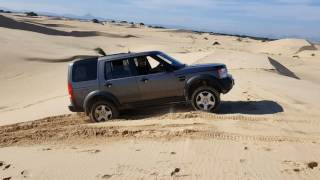
The family hauler with serious off-road capabilities. Thoughts from a Discovery 3 owner of 10 years – Build quality is an absolute strong suit for the British manufacturer in recent years. Even though this is the Discovery S (the entry level model),… Read more
construction was at its highest throughout the cabin and on the exterior.
Weighty doors, solid ‘thunks’, high quality faux leather and cloth seats and soft touch plastics were a treat.
This is the Discovery S D300, meaning it packs the best diesel engine option Land Rover offers. Priced from $101,875 before on roads as a starting point, throw in a few options like the ‘Advanced Off-road Capability Pack’, wireless charging, and an ‘Active Rear Locking Differential’ and you’re looking at a $110,910 car.
From memory, our fully-laden Land Rover Discovery 3 HSE TDV6 was priced around this point, so a combination of inflation and price rising has occurred since 2006 - that’s for sure.
To be honest, there’s a lot of standard equipment provided on the new Discovery, even in its base form.
Air-suspension, comprehensive 3D camera system and electronically folding seats are all excellent standard features that usually would have been reserved for higher trims.
Land Rover recently upped its warranty offering from 3 years to 5 years/Unlimited kilometres with 5 years of roadside assistance. You can purchase a service plan for 5 years or up to 130,000 kilometres of driving, for $2,650.
Wind noise was non-existent - something I’d put down to the dramatically smooth design, compared to previous generations of the Discovery.
Stopping a Land Rover never felt so smooth. I distinctly remember the car I learnt to drive on (the Land Rover Discovery 3) was incredibly smooth to operate, and was more than capable at sudden braking and trail braking away from danger.
The same can be said here, but with additional ability than a car built in 2006. Braking is predictable, and requires no more effort than using a brake pedal found in a Fiat 500.
Under the bonnet of this Discovery is a 3.0L twin-turbo charged 6-cylinder diesel mild-hybrid motor, and it packs a real punch.
Traditionally, big cars and big diesel motors never result in performance on the road. However, Land Rover’s Ingenium D300 motor is a completely different story.
Producing 220kW at 4,000rpm and 650Nm at 1,500-2,500rpm, there’s plenty of power here being sent to all four wheels via an AWD system. 0-100km/h times are as brisk as 6.8 seconds, which is quicker than my 1000kg Abarth 500! This is mum’s 7-seater SUV we’re talking about, which is faster than ever.
The 8-speed transmission in the Discovery was mostly fault-free, although on occasion it did have a moment where gears clunked together, rather than being swiftly engaged.
Around 95% of my driving saw a flawless performance from the Discovery. Shifting into gear was easily operated, I especially love the dedicated park button that helps you avoid any mis-shifts.
5% of the time I experienced moments of indecisiveness from the gearbox, which momentarily distracted from an otherwise premium driving experience.
Land Rover’s air suspension system is a lot of fun, thanks to just how adjustable it is. The car can move from an access height, through to ‘Off-Road 2’, which allows it to wade through 900mm of water.
The ride height difference is amusing at times, allowing you to tower over Mercedes G Wagons, and then change the height to enter a sub-2m tall underground car park.
It’s a sublime ride, and there’s never an issue with being uncomfortable in the Discovery. It’s capable on road, through corners and on loose surfaces. Although, compared to the Defender, I could tell the Discovery did waver a little bit through sweeping bends at high speeds, thanks to its high centre of gravity and narrower footprint.
Off-road, there’s a reason why you’ll see more smiles in a Discovery at the end of a serious trip away from the tarmac, compared to cars like a Jeep Wrangler. Ruts, rocks and large dips in the road didn’t once make me feel uneasy, unlike some cheaper 4x4 SUVs. It’s clear that spending the additional money provides a far superior ride both on and off-road.
Even though this is a diesel, has turbochargers and is a mild-hybrid, don’t expect to be saving at the pump. Claimed combined fuel efficiency is 7.5L/100km, however daily driving saw me produce figures as high as 12L/100km, even after heading out on the highway.
Land Rover has stepped up the game with the new Discovery’s interior. It’s an exercise in minimalist design, while still giving you everything you need right at your fingertips.
There’s plenty of space throughout the cabin, however it starts to get a bit cramped in the third row’s foot well. I particularly love just how much foot room the driver gets, making it a lot more comfortable to drive long distances behind the wheel.
The curved infotainment display uplifts this cabin into 2022, along with a noticeable lack of physical buttons. The important ones are there, like climate controls, volume and terrain response, but that’s it. I miss the old adage that you could operate all the features in a Land Rover while wearing a pair of thick gloves.
As Land Rover becomes more reliant on screens, you’re going to need to ditch the gloves to take full advantage of that touch screen.
Storage is the other headlining feature here, with a ridiculously deep, dual level glovebox and secret compartments under the transmission tunnel and behind the climate controls. It was a lot of fun to see just how much stuff you could fit in and around the Land Rover’s interior.
With all three rows up, there's only 258L of boot space on tap. However, fold all of those seats down, you’ll reveal 2391L of boot space. You’d see why we chose this car back in 2006 to help us move to Australia after living overseas.
A most welcomed surprise was just how easy it was to operate the electronically folding second row seats. Both up and down, you can use buttons in the boot to completely fold the second row flat, making it less of an effort than ever before. Although, if you want to just fold the middle seat down, you'll still need to do that manually.
Second row space is extremely generous, although the seats sit a little too close to the floor of the car, creating a gap between your knees and the seat itself. This forces you to recline back to retain comfort on long trips. Seating for three is beyond reasonable, as three adults can place their feet comfortably on the flat floor, thanks to an absence of an obvious exhaust/transmission tunnel.
Despite its size, third row seats are a little tight for adults to comfortably rest. Additionally, the ingress and egress hasn’t been as well executed like in cars such as the Kia Sorento. However, if you frequent the third row, it’s still one of the larger sets you can sit in, this side of $150,000.
The only reason my family didn’t keep our old Discovery for longer than 10 years was the cost of servicing post-warranty. When things go wrong (and they did), it did cost a lot to keep a car as complex as that on the road.
We weren’t burnt by our experience, rather, we bought a Range Rover Evoque to ‘downsize’ from the burly Discovery 3. Additionally, I think we would step into a new Discovery if we wanted to, as it really is an excellent evolution forwards for the iconic nameplate.
The added warranty period gives a massive leap in confidence for what would usually be a normal finance period (5 years). Although, my eyebrows would become raised following the end of that warranty period, from our past experiences.
For most, the Discovery will hit the nail on the head for a car that’s easy to use deep in the inner-city, and take out into the wilderness. By comparison, the Defender can become a little too big for its boots when operating along the school drop-off route and in tight side street parking situations.
*Disclaimer - I work for ProductReview as their independent car and motorbike expert. I borrow new cars and motorbikes from manufacturers and owners to review. I am not paid or incentivised by these brands to post reviews. I write and create content to provide insight and information about any new or used vehicle I can get my hands on.

- See all


The inner-city friendly Defender is easy to live with, turns heads and fun to drive anywhere – Land Rover has moved upmarket in its build quality, and that’s clearly found on the new Defender. There’s not a single panel out of place, nor is… Read more
there a questionable bit of trim found both inside and out of this off-roader.
Although I wish things were buttoned up a little more on the inside, as there were some squeaks and rattles found while driving around in this particular Defender.
Pricing for the Defender 90 S P300 starts from $87,073 before on-road costs. However, if you add a folding fabric roof, digital rear view mirror, activity key and an electronic active differential, you have a final drive away price of $95,172 before on-road costs.
Land Rover offers a complementary 5 year/unlimited kilometre warranty and a servicing plan that covers 5 years or 102,000kms for $1,950.
The P300 engine option in the Defender line-up offers little cabin intrusion, and actually burbles and pops when you drive it a little harder than it has any right in being driven.
It’s a subdued cabin, offering a quiet ride and allowing you to enjoy the passing scenery or whatever is playing over the speakers. However, a distraction that I hope was an anomaly was a harsh base rattle emanating from said speakers.
The mass, size and dynamics of the Defender 90 makes it brake like a large hatchback.
This P300 motor is a 2.0L inline turbocharged petrol 4-cylinder motor producing 221kW at 5,500rpm and 400Nm from 1,500rpm to 4,500rpm.
Usually diesel would be the pick for a vehicle like this, however the P300 motor produces peak torque at a low enough figure that I’d almost pick this engine with the added benefit of extra straight line performance.
It’s reactive and moves a larger two door off-roader like this with absolute ease. You can cruise at low rpm, and swiftly move up to speed in a mere 7.1 seconds - respectable for a car not designed to win drag races.
Paired to this motor is an 8-speed automatic transmission. It’s smooth, quick to react, and feels well suited for daily driving in the city and tackling rock crawling on the weekend.
There’s a low range option in this gearbox that feeds power smoothly and predictably, offering greater capability than simply cruising on tarmac.
There are no paddle shifters to change gears, instead a sequential pattern can be found on the physical gun handle-like shifter up on the dashboard of the Defender.
Riding on coil suspension instead of the optional airbag suspension, this Defender feels fairly different in its handling.
There’s no adjustability to be had. Instead, you’re set with the one height and stiffness option unless you opt for air suspension.
The fixed height allows for ease of access into most car parks and will still allow you to cross 850mm of water. However, I did miss the ability to raise and lower the car for ease of entry for some shorter passengers and being able to clear some slightly more aggressive sections of our off-road test track.
The fuel efficiency of the P300 motor is average. This is a heavy, 2 tonne off-roader, so you can expect an average consumption figure of 10.1L per 100km. I saw figures as high as 13L per 100km during my week with the 90.
I was thoroughly impressed with the Defender’s interior when I first reviewed it last year. This year is no different; I’m still just as smitten when spending hours at a time inside this car.
Handy placements of storage cubbies, handles and large buttons make interacting with this cabin feel logical. There’s no lack of places to store loose items, and you won’t struggle to find a spot to hold your oversized metal water bottle.
The ‘floating’ centre display is easy to read and has an excellent UI known as ‘Pivi Pro’. As I experienced first hand, you receive regular over-the-air updates to keep your Land Rover packed with the latest digital features.
It’s a rugged feeling interior, with no carpet found anywhere to allow for easy cleaning, all complemented by the exposed bolts along the doors and centre console.
What I’d seriously consider opting for would be the large fabric folding roof, which would add another dimension to enjoying this interior. With it, you could either stand up in the back seats and eat your dinner from the roof of the car while enjoying an elevated view, or soak up that Sydney sun while driving.
There isn’t a whole lot of boot space compared to the Defender 110, but the Defender 90 is still a wildly practical car.
Front seats are what you’d expect for a large two door car like this, with plenty of comfort and space.
However, the rear seats, despite lacking their own entrance, are extremely spacious and roomy. There are two windows and that large fabric roof to let more than enough light into the back. It’s one of the very few two door cars where four, maybe even five adults could enjoy spending lots of time over a long drive.
Look, I’m going to be honest. The Land Rover Defender 90 is purely a product for those who are looking for the best of both worlds, those being luxury and capability.
There are cheaper alternatives out there, but with a reduction in price also comes a sacrifice in either capability or creature comforts.
It’s not for everyone, but for those who want the off-road equivalent of a weekend sports car, that’s where the Defender 90 comes in.
*Disclaimer - I work for ProductReview as their independent car and motorbike expert. I borrow new cars and motorbikes from manufacturers and owners to review. I am not paid or incentivised by these brands to post reviews. I write and create content to provide insight and information about any new or used vehicle I can get my hands on.

- See all


By far the worst vehicle I have ever owned, literally fell apart, both turbos died, oil leak in the engine bay, the doors had a malfunction and the… Read more
car alarm would constantly go off, the engine also would over heat if I towed anything that weighed more than 500kg . And if that wasn’t enough I only hand washed the car and one day I was gently washing the Range Rover sign at the front and one of the letters fell off !!! Also the back side panel above the small rear window started coming off, I’m not joking when I say the vehicle was falling apart ! But wait there’s more! Water got inside the front headlights another 7k to fix those too !!
It was the car of my dreams and it turned into a nightmare, the car was 3 years old with 45,000 on the clock so practically new, and spent months at the mechanics and they wouldn’t even give me a loan car, what a joke, i finally sold the vehicle at a massive loss even though I fixed all the issues . When I asked the Land Rover dealership if I could trade it in for a second hand car in their lot which wasn’t a Land Rover they refused to take their own vehicle back!! lol Do yourself a favour buy any car but Land Rover worst experience of my life!

- See all


Warning - if you pay a refundable deposit you won't get it back if you change your mind despite what Customer service will say. Customer service is horrendous; they will completely ignore your emails.

- See all


The worst experience of Range Rover Evoque – The only honest idea I can say about it ; Stay away from this car, too many faults , every other day new error comes to screen,if you are not a long… Read more
distance driver,never get diesel car as you need to clean its DPF evey 2 months and the cost is around $800. It is very hard to sell this car ,take ages as everyone knows about the problems

Hunk of junk Landrover – Looks nice and classy but it's a 200grand hunk of junk, at 60000kms I have spent 20grand on it Landrover service new fuel pump ,suspension redone… Read more
then a 6000aud service at 6000k then was told by suspension bolts need redone at 2000grand which wasn't part of the first new suspension put in and now believe it not my oil filter isn't reading that's apparently 7000grand job...money eating machine will never buy British car again no matter how good looking it is and the service at landrover rubbish

Great Looking car - Fuel consumption for a 2 litre car is horrible – The car comes with a huge 83 Litre Tank get about 600km per fill - however specs by Range Rover suggest combined consumption is 7.8 litres

Would rate them a 0 if I could. JAGUAR LAND ROVER AUSTRALIA I am absolutely disgusted in the lack of customer care or accountability for jaguar… Read more
f-pace 2.0L Diesel engines just blowing up at 60,000kms 2018 model, regularly serviced, its a "high end" vehicle and it is unreliable, I had my 2 year old daughter in the car when this happened. I have had 2 reports done by jaguar specialists here in WA which both came back to catastrophic engine failure and your CRCAU are coming back with "second owner of vehicle" "inadequate service" when it has full service history, and second owner means NOTHING. There is a Facebook page called Jaguar Land Rover DPF & Engine failure group with over 19,500 members on board, I reached out to another fellow Australian that has been impacted with a car that has done 150,000kms 2017 model and is the THIRD owner of vehicle and still got 100% compensation. I have been rejected TWICE. what am I supposed to do with my loan and a "high end" vehicle that has blown up and absolutely useless to me? under the ACCC if a car is not fit for purpose I am entitled to a refund, replacement or fixed.