Best Men's Shavers / Razors

Oscar Razor
4 blades lasted 4~5 months each ~1.5 years total. That's an amazingly long time for a set of razor blades to last with daily use. I've been using… Read more
Oscar blades for about ~10 years and am impressed with how well they shave and how long they last.
The cost works out to ~$1 per month (~$4/blade) which is very modest... so paying a little more for each blade when purchasing saves you in the long run. Once you realise how little you're really paying the purchase price is no longer a major factor.
The handle has a tendency to fall apart if you drop it... but it's fairly easy to reassemble and shows no signs of breaking. It's a fairly substantial handle and easy to grip.
The blade sometime detaches from the handle... but it's fairly easy to reattach... just annoying.
Shaving while showering might help explain why the blades last so long. The blades get changed when the lubricating strip across the bottom starts to wear out i.e. When the shave starts to become less smooth. The blades are still cutting but they start to irritate more and you start to get the odd nick. They last so long you often lose track of how long you've been using the blade. It would probably be preferable to change the blade at the 4 month mark to obtain the best shave. Stretching it to 5 months is probably false economy.
My rotary blade electric shaver still gets a bit of use... but over the years Oscar has convinced me to use a blade most of the time.
Oscar's only problem is that they want you to autoship. Oscar seems to have assumed that if you didn't order regularly you didn't want to be a customer. That's wrong. You order infrequently because the blades last so long... but you keep coming back... and your orders keep getting bigger because you've figured out what you want and how to ensure autoship is not enabled N.B. The website now seems to work better: It's easier to find settings and change them.
Oscar have been very helpful the few times I have contacted them for help.
Oscar blades shave smoothly and provide a superior shave compared to other razors. Oscar is cost effective and you'll probably regret not trying them sooner. Oscar is the best shave you can get for a modest price. If there's a better shave out there somewhere I've yet to find it.
:-)
P.S. I suspect there is interest for an even better blade and handle if Oscar were game enough to try. They have certainly earned my trust and I'd be willing to try a product that offered even better performance. PPS. I used to have a handle that vibrated the blade and helped it cut better. I've always wondered why more companies don't do something like this N.B. Not all vibrating handles do much. Some vibrating handles work better than others.

Coles Rapid 5 Razor
It's great using this razor, it's good for sensitive skin like me. Awesome product and highly recommended! Show details

Bic Flex 5
Face cuts from Bic – I am a man of 65 years and have used disposable razors for a good many of those years. I find that Schick makes the best Razor, even Gilette and Aldi prince are OK: However every time I use a Bic it cuts my skin, always used with excellent foams... Show details

Schick Hydro 5
Runs rings around gillette – Used it for year, tried others but always came back to hydro5. Buy blades on sale, just stocked up, $ 18.00 for a shaver with 9 blades, can't beat… Read more
that. I only use it in the shower with just good soap, never had a problem, close shave and never any cuts.

Philips One Blade
Device was not used much and now fails to charge. Will not work or hold charge. Device worked well when in operation but has a design fall. Phillips… Read more
warranty section is an automated circle that does not let you request warranty review. I have had multiple failures with Philip devices and cannot recommend their brand in any capacity.

Gillette Fusion Power
Quality of Gillette is now VERY POOR. They have lost a customer who has been loyal for over 50 years.

Braun Series 9 Pro
- See all


Shaver head lasted less than 1 year. Foil got a hole in it. They are not cheap. For me the shave was good. Show details

Bic Hybrid 3
One of the Best ,Disposables ,Available At any Price! – Why,spend more?.This is one of the best disposables,"I", have,ever used!!.Nothing flash??.Just has never,let me down!!.Why buy Gillette?Bic and… Read more
Shick,is better!.Even Aldi blades are Very Good!.Better than Gillette.I Get ,between 5,6,Shaves Consistently from this product!.

King of Shaves Hyperglide
The correct angle for my face – This has a unique design, it is so logical when you hold it against your face you wonder how we have all been conditioned to accept the design of the standard razor. I use it these days because it is quicker. Show details

Koi For Men 6 Blade Razor System
Yes, the light stays red!! but after 8 hrs.' of charging, I found it does the job and is an excellent Product, I didn't Buy this shaver cause of the… Read more
light!! (red or green) I bought it to cut hair and beard, the blades are very sharp and perfect for trimming, People Whine too much, in this Lucky country of ours.

Wahl Traditional Barbers Safety Razor
Over complicated design for a simple product – Great shave but serious design fault blade changing,fitting a new blade is relatively simple if you have a flat surface and a towel but removing the… Read more
old blade is downright dangerous and have cut my self twice, needs a design upgrade, the only advantage in the design is that you save a lot on razor blades being too frightened to change them

Gillette Labs with Exfoliating Bar
- See all


I enjoy a good shaving experience - and switched from another well-known brand I have used for years to the new Gillette Labs.(Not cheap - $45 with… Read more
two blades) I always use a shave cream with black carbon. In spite of initial reservations, I am pleasantly surprised - the closest shave (without any skin irritation) I have experienced (from a home use product). I expect the blades to last well (we'll see) - however, I can confidently recommend this razor. August 2026... Pros - good shaving experience - particularly the first five - seven shaves - then: Cons - Blades don't last beyond two weeks before drag... Now, I can't have the toughest whiskers in Australia; blades are ridiculously expensive! Raise the issue with the 'help' line... waste of time - all they do is read you a script 'apologizing for my experience...' Do I still recommend this product? - yes, if you are prepared to put up with abysmal product support, and are happy to pay excess value for a new blade every one - two weeks. Gilette - wake up!

Fantastic – These are very sharp & inexpensive get quite a few shaves out of these ! Great handle fantastic will buy more are only available @ Aldi stores for &4,49 Great value for money!@

What a surprise! – Purchased this Rasor a month ago, as I was annoyed at continually spending $9.00 for 4 Multi Blades for shaving. Typically a disposable multi-blade… Read more
will last 3-4 shaves and thats it! Bought the Rasor, a pack of 10 Blades (non-propiretary), a Badger Hair brush and some shave soap and a bowl, $82.00 all up. It requires a different approach than to disposable blade shaving and takes a little longer, 5-7 minutes. However, the results are worth it! I much prefer this method of shaving as it is more satisfying, no pulling or rough bits on the face skin, no rashes and after three passes I'm done and just as good a shave as a multi-blade rasor. Technique comes with use and there are videos (believe it or not!), showing you the correct method to get the most out of the Rasor. Also way better than an Electric shaver which are also costly to run, about the same as disposable Blades. It's also a bit "Old-school". So I get around 12 comparable shaves out of one blade $1.20 or ten cents per shave. I dismantle, clean the rasor after use with toilet paper, ready for the next shave. I think this is the key to longevity of the blade. I'm happy so I thought I would share this as some people may be a little apprehensive about making such a move.

Fantastic shaver – Fantastic shaver with 5 blades that shave quite comfortably, accurately & smoothly. This shaver is similar to the Schick hydro 5. A single blade will last at least 4 months. But avoid the Phillips one blade shaver.

Gillette Heated Razor
An indulgence that you will find worth it – * Update - a year later I still have the same view of this product a year on. It delivers a good shave every time. Admittedly, you don’t notice… Read more
the heated bar as much as you did initially but there’s something about that makes the whole shaving process more smooth and seemingly faster.
I did have my first device replaced under warranty after about three months- The bar just stopped heating. No problems with the replacement.
One bit of advice - after use shake the razor so any water in the blade assembly is expelled. I found that if you don’t, water drips into the charger base.
Original review-
I am too young to have ever had a hot towel shave with a cut-throat razor at a barber. But I have read there was “ a practical reason for this classic ritual: the heat from the towel softens up your beard so the barber can give you a nice, close, comfortable shave.”
I have been using the Gillette heated razor for three weeks now. My verdict is that the shaver delivers on its promise of the “comfort of hot towel with every stroke.”
The shave is smooth, close and leaves that sense of having a hot towel applied to your skin. It was very noticeable the first few times I used it, and after three weeks, there is still that sense after every shave, albeit probably not as strong. But after every shave, there is definitely a feeling of satisfaction there.
The razor heats up seemingly instantly when you turn it on. You can certainly feel the warning bar against skin, especially on the softer ares of your skin.
It probably works best if you slow down a bit and are deliberate in your shaving motion, but having said that, you can speed along if you had to, but you may not always get the best contact of the warming bar against your skin.
Also be careful not to turn off the shaver with finger grip, while shaving.
I used my blade 21 times before changing and even then I could have kept using it if I really wanted to. It was a little scratchy after three weeks of use, but by no means ineffective.
Yes the heated shaver is an indulgence, but if you can afford it and justify it, it’s well worth getting the experience

Clean Cut without the Expense – My Pop used a double edge safety razor all his life, then i found out why - apart from the initial setup - shaving with Double Edge Safety Razors is… Read more
as cheap as chips - with prices of everything going up from fuel to food you need to find some savings - well - this is it if you want to learn how to shave properly - Hot Water, a good Shaving Cream and a quality Shaver and Blade - Edwin Jagger is your Razor if this is what you want - I use the “Closed Comb Head” as its not as aggressive as Open Comb and with a knurled handle for Grip - one of the things i found with super market multiblade shavers is that they block easily and cause painful ingrown hairs, argh!! .. double edge safety razors like Edwin Jagger are brilliant for not blocking up and giving a close shave without the ingrown hairs that swell up like a second head on your body - I’ve never been happier - I use Edwin Jagger Shaving soap as well with FEATHER Blades - if you buy the blades in bulk they are like 10c each and can last for months - i only shave around 3 times a week and change blades like every 3 or 4 months - shaving with 2 or 3 days growth is no drama with the Edwin Jagger double edge safety razor - try that with a mulitiblade razor and you’ll spend most of your time trying to swishing it around trying to unblock it so then you need to shave every single day to keep the whiskers low and it’ll cost you a fortune !! 5 Stars!!

Gillette Fusion
Gillette Fusion5: Faulty Razor Handle Was Frustrating, But the Customer Service Was Worse After more than 25 years of using Gillette products and… Read more
over a decade using the Fusion system, this is the first time I have ever had to lodge a complaint. Unfortunately, the experience has left me questioning whether Gillette's customer service actually reads the information customers provide.
On 31 May 2026, I submitted a detailed complaint regarding a Gillette Fusion5 handle that appeared to fail after approximately one use. I provided extensive evidence including photographs, proof of purchase, batch numbers, manufacturing details, barcode information, comparisons with previous Fusion cartridges, and a detailed explanation of what had happened.
The problem was not complicated.
The cartridge originally attached to the handle appeared different from the remaining cartridges supplied in the same pack. Based on the photographs, it appeared that part of the handle mechanism had broken and remained lodged inside the cartridge connection point. I documented this extensively. Instead of investigating the fault, Gillette repeatedly sent emails asking questions that had already been answered in the original complaint and photographs.
On 2 June 2026, I was asked whether Cartridge B fitted correctly and how many cartridges were A and B. I responded and explained that both cartridges came from the same pack and that the labels A and B were simply labels I had created to make the discussion easier to follow.
On 3 June 2026, Gillette again requested information, including asking which production code the cartridge came from and questioning why I believed the handle was faulty.
At this point I was genuinely wondering whether anyone had actually reviewed the evidence I had already provided.
The production codes were already supplied. The photographs were already supplied. The explanation was already supplied. The receipt was already supplied. The fault description was already supplied.
Yet I found myself repeatedly answering variations of the same questions.
I even sent additional photographs and offered to return the handle and cartridges to Gillette for inspection if they would provide a reply-paid envelope. Despite my cooperation, the process felt less like a genuine investigation and more like an exercise in repeatedly asking the customer for information already sitting in front of them.
The irony is that I spent more time proving there was a fault than Gillette appeared to spend reviewing the evidence.
Eventually, on 5 June 2026, Gillette offered a $70 Coles voucher as a goodwill gesture. I accepted because I still use Gillette products and have invested hundreds of dollars in compatible Fusion cartridges over the years.
However, receiving compensation does not erase a poor customer service experience.
The product fault was disappointing. The handling of the complaint was worse. No customer should have to write multiple detailed emails, repeatedly explain the same issue, repeatedly identify the same photographs, and repeatedly answer questions that have already been answered in previous correspondence. If Gillette had simply reviewed the original complaint properly, this matter could have been resolved in a fraction of the time and with far less frustration. The final outcome was acceptable. The customer service process was not.
After decades of loyalty to the brand, I expected considerably better.

Schick Quattro
My partner bought them for himself originally for facial hair - useless! So he gave it to me for my legs, I put a new head on it, and…. Useless! Show details

Replacement cuttters for Philips 3000 series – Replacement cutters made in China do not last long: maybe a month or two at best. The ones made in the Netherland ar far superior. Although it says… Read more
on the box (Netherlands), that the cutters should be replaced every 2 years, it does not mean thay are doing a good job cutting for that length of time. As they wear, there is a tendency to push harder to get a good result. This could cause you to get a rash and take longer to shave. In my experience the cutters should be changed every 12 monnths depending on your type of beard. I would assess myself as having medium growth and density.
Not a bad option – I was surprised using these razors I get 3 to 4 shaves per razor for $12 with 10 cartridges from Coles This razor is worth a try as razors getting very costly here in Australia

VS Sassoon The Precision Shave VSM350A


Coles Rapid 3 Razor
Worst razor I have ever used. Out of sheer frustration, and in the hope od getting a decent result I actually ended up using some of my old used razor blades. My advice is do not to be foolish enough to purchase Show details

Schick Exacta 2 Sensitive
I have used a power Schick razor for years,so I thought the Exacta2,would be a good buy,especially for travelling.NO. The guard was really difficult… Read more
to get off,and the shaving standard,for a sensitive skin like mine,was terrible. I have tried Bic 1 and Gillette disposables,and they are so much better. Disappointing.

Awful, cheap, breaks easily – If it feels cheap and plasticky, it's because it is. Bought 2 of these and each barely lasted me a month before the cheap plastic but holding the… Read more
cartridge broke off. The shaving wasn't smooth at all and cut me way more than schick hydro razors. A very disappointing and poorly designed product

Form over function – Short answer. Buy one. Long answer. Sadly, it’s form over function. I bought the top-end steel version and used it for three months. Feels… Read more
beautiful in the hand, looked lovely in the bathroom. That much alone made me want to keep it. However, functionally, it’s flawed in almost every aspect.
That blade that slips in? It’s not held tight, the blade moves around. The company calls it a floating blade system. Err, no, it’s poor engineering tolerances. I can image meetings long into the night where they’ve talked about what it would take to stop the blade moving around and marketing had to make it a feature because the engineers didn’t have a commercial solution. Why does it matter? Well, the blade doesn’t starting cutting from where you place it on your skin. For me, that meant shaving under my nose left some hairs uncut (and I can’t shave at a different angle to get at them as I have a moustache).
Genesis say the OneBlade provides a very close shave. But in the video where they demonstrate the OneBlade vs multi blade systems, they show how the latter pulls the hair from your skin before a subsequent blade cuts the hair. So, by definition, the mass produced multi blade shavers will provide a closer shave. If you use a Gillette and it doesn’t cause irritation, nicks or bumps, stick, don’t twist.
As you shave, the lather washes down the handle and becomes slippery. This really doesn’t help the shaving process, some rubber grip would help for sure, but you know, it wouldn’t look so good.
If you have time in the mornings, you’ll enjoy the OneBlade. It’s slow but methodical and genuinely a pleasure to hold, making a satisfying noise as it strokes through your hairs. You have to concentrate, be precise and focused on every stroke.
I didn’t enjoy changing the blade every 3 shaves, I didn’t have time for that. And for the most part, I need to shave before I go to work, I just need to get it done. I’ve seen their marketing repeat a reviewers words, “…if Apple made a razor…”. I’d actually say, “…if you want a vintage Ferrari that you only take out on Sundays…”.
The first time I went back to my Gillette, OMG. It’s faster, better and does exactly what I expect it to. All over my face, neck etc., I’m not thinking about being super careful, it’s just getting the job done.
So why did I start the review saying buy one? Because you should. They offer a 90 day MBG. That’s what I did, decide for yourself. Your expectations, skin condition, shaving requirements etc., might mean that this is a great razor for you. It just wasn’t for me, but I admire them for offering up such a beautiful razor.

Gillette 5 Aqua Razor
Not good – This shaver doesn't shave comfortably and accurately. For example when I came to use the first new blades on my face, I could feel the hair being pulled. I don't even have a stumble. I highly recommend the Schick hydro 3 & 5 instead. Show details

NO STARS RATING - Absolute RUBBISH This is a NO-STARS RATING (Not 1 star, only for review purposes) I bought this product thinking that this… Read more
could/would be good for my facial hair. How was i so wrong. The first blade i used couldn't cut short stubble hair that I had on my face. Thinking i'd have a shower to maybe soften the hair on my face, with the second blade, that also couldn't cut my facial hair. This product is, it needs to be discontinued

Merkur Solingen Heavy Duty Safety Razor
Corrodes quickly – These corrode in a short period of time. The chrome plating will pit exposing the cheap pot-metal the razor is made of, and corrodes making the razor… Read more
useless if happens on the edge. I wrote to the German company but were rude. Blamed the water quality.

Is it better to shave with a razor or electric?
This is a question only you can answer, as both manual shaving razors and electric razors have drawbacks and benefits. What you choose will ultimately depend on how close you want your shave, how protected you want your skin to be while shaving, how much time you’re willing to spend shaving, and how much money you’re willing to part with up front.
| Criteria | Electric razors | Manual razors |
| Closeness of shave | A less close and precise shave than a manual razor. | A closer shave than an electric razor, as the blades make direct contact with skin. |
| Level of control | You have less control, as the rotating blades are doing most of the work for you. | More control available, as you’re in charge of the direction and speed of the razor. |
| Time commitment | Quicker to use than a manual razor - no wetting and lathering required. Time spent actually shaving is also shorter due to the electrically powered blades. | Takes time to wet and lather face, and to shave slowly and gently to avoid cuts and nicks. |
| Skin safety | Less likely to cut or nick yourself using an electric razor - however, razor burn is still possible due to the high speed of the blades. | Easier to cut yourself or develop skin irritations like razor bumps and ingrown hairs, especially if using a cartridge razor with multiple blades. |
| Difficulty level | Easy to operate, as the electrically operated blades oscillate evenly over your skin’s surface. | Depends on the type of manual razor you’re using, e.g. safety razors take more practise to use effectively than disposable razors. |
| Upfront cost | More expensive upfront cost for the device than manual razors, usually starting around $80. | Cheaper initial cost than an electric model. |
| Ongoing cost | Blades require replacing every 6-18 months, depending on the make and manufacturer of your shaver, and how often you use it. Can be $50 for new blades. | High ongoing cost, especially if you’re using disposable razors, or frequently buying replacement razor cartridges. |
| Maintenance | Need to recharge or replace batteries, clean blades regularly, and lubricate blades with oil. | Easier to maintain than an electric razor, especially single-use disposable razors. |
Types of razors
Disposable razors
These are also known as disposable cartridge razors or multi-blade disposable razors. These razors can be bought in packets from supermarkets, and are made up of a (usually plastic) handle attached to a cartridge that can have anywhere between 2-7 blades on it.
In better-made disposables, the top and bottom blade edges will have a lubricating strip on one edge and a comb to help flatten skin on the other edge.
Shaving systems
These refer to reusable razors where you keep the handle, but swap out old razor cartridges for new ones. The cartridge is the part of the razor that houses the blade, as well as a blade guard, lubricating strip and comb, if included.
You can buy shaving systems at supermarkets, though it’s also common to find monthly subscription services for men’s shaving systems, like for the popular Oscar Razor.
This usually involves ordering one razor handle and cartridge to begin with. Then the razor manufacturer will mail you your chosen number of new cartridges every month.
Shaving systems have similar pros and cons to disposable razors. However they are usually made with better quality materials - including the handle and the blades.
Safety razors
These are more traditional men’s razors that evoke a nostalgic, barber-shop feel.
These attractive steel razors feature a short, solid handle that holds a cutting head.The most common type is a double edged safety razor. This has a replaceable, double-edged blade, which is surrounded by a safety bar. The bar protects the skin during shaving. Safety razors are designed for long-term use.
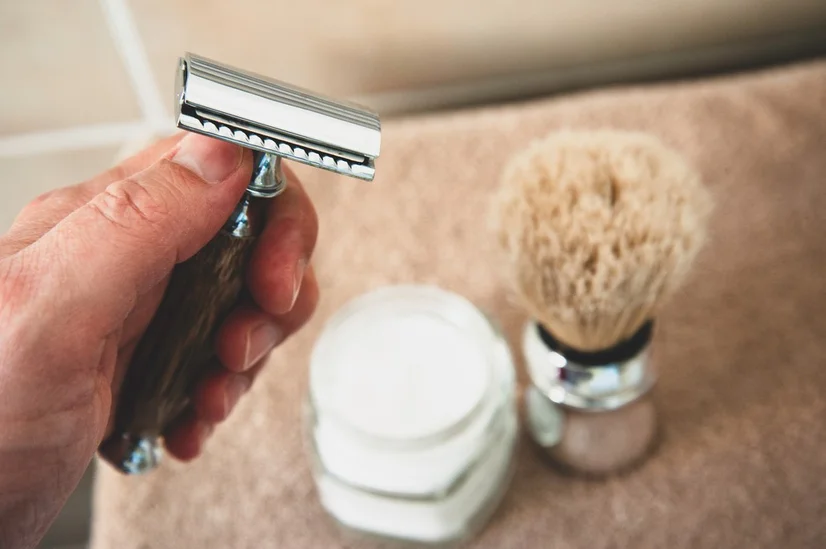
Is a safety razor really better?
In a nutshell, if you’re willing to put in the time and patience to learn the skill of using a safety razor effectively, you could be rewarded with plenty of close shaves that are both gentle on your skin and bank account.
Safety razors have earned themselves a strong following in the male shaving community. Here are some reasons why.
Safety bar designs
Safety bars come in different designs - some will expose the blade minimally, resulting in a more gentle shave. Other safety bars expose the blade more to the skin, resulting in an aggressive shave. Neither is better or worse, it just depends on what feels more comfortable to you.
A gentle shave
- Flat bar: This offers the most gentle, and least aggressive type of shave using a safety razor. It’s the safest choice, and has a gentler learning curve - but may require more passes to remove all hair.
A medium-aggressive shave
- Scalloped safety bars have a bevelled guard, which provides a medium amount of aggressiveness. They’re good for sensitive skin, as you won’t have to make multiple passes over skin (which you’d do with a flat bar), and they’re not as abrasive as blade designs used to achieve aggressive shaves.
- Closed comb bars are also good as a happy medium, as the safety bar closes the combed blade on the bottom.
Aggressive shaves
- Open comb: Here the comb-like blade is completely exposed to the skin. It’s a very effective - and aggressive - blade design, and tackles thick, coarse hair with ease. It’s also the friend of men who shave infrequently. However, since the sharp blade is so close to the skin, open combs are only recommended for experienced safety razor users.
- Slant bars: These safety bars are positioned at a diagonal (instead of in a straight line). As a result they use a slicing motion instead of a cutting one. This means you have to apply less pressure to get a clean shave the first time around.
If you’re not sure
If you’re new to safety razors you might not know the level of aggressiveness you prefer. If this is the case, you can start off with an adjustable safety razor.
This lets you adjust settings that control how exposed the blade is to your skin. Figuring out what feel you prefer and using that setting may end up being more resourceful than choosing safety bar design without trying it first.
What is the best way to shave for sensitive skin?
If you have sensitive skin, you may be sick of your skin being in a constantly bumpy, irritated or bleeding condition after a shaving session.
Switching from disposable razors to a safety razor may help be more soothing to your skin, as disposable razors are more likely to cut skin with their multiple blades.
Marketing for men's razors commonly spouts the view that the more blades in a razor, the better. However, this isn't neccessarily true for sensitive skin. When more blades are making more contact with your skin, it's likely to make skin more irritated.
Skin can also become more irritated and sensitive when the razor that you’re using is unclean. If you’re using anything other than a single-use disposable razor, maintaining razor hygiene is important. Otherwise bacteria builds up on the blades, thanks to a mix of old hair, dead skin and shaving cream residue.
When this makes contact with skin, it can make it more irritated, and even leave you with infected bumps that are painful.
Quick tips for razor hygiene
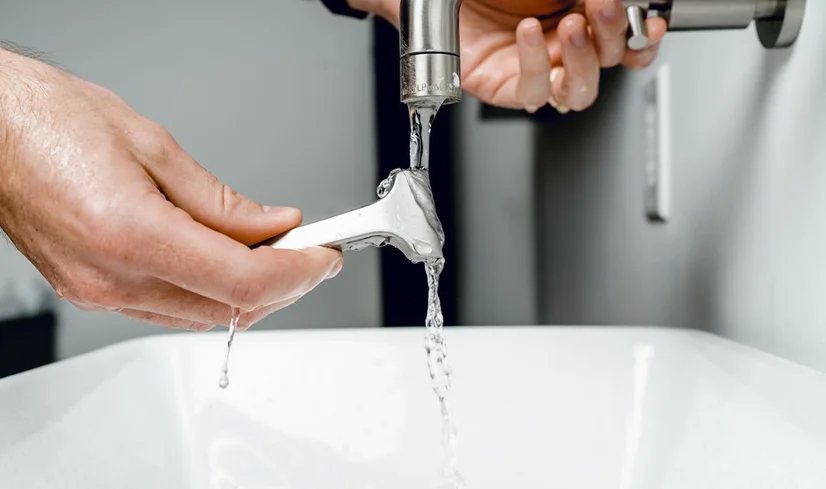
Some tips for razor hygiene include rinsing your razor with hot water after every use, covering the blades in a clean plastic cover, storing the razor upright in a dry, non-humid spot, and replacing your razor regularly, before you start to notice the blades have already become dull or dirty.
Hello there, Thank you for your valuable… Read more